

Europe needs to get real on defence; Britain needs to get real on Europe
13 February 2025


Post
4 September 2013

2 minute(s) read
Recent Posts

1 January 2026
Posted by Alastair Campbell
483. The Future of British Politics, How The World Order Is Changing, and The Power of History
What does this year look like for the future of British politics? How is the global order going to be reshaped? And will the power of historical narratives become even stronger this year? L... Continue31 December 2025
Posted by Alastair Campbell
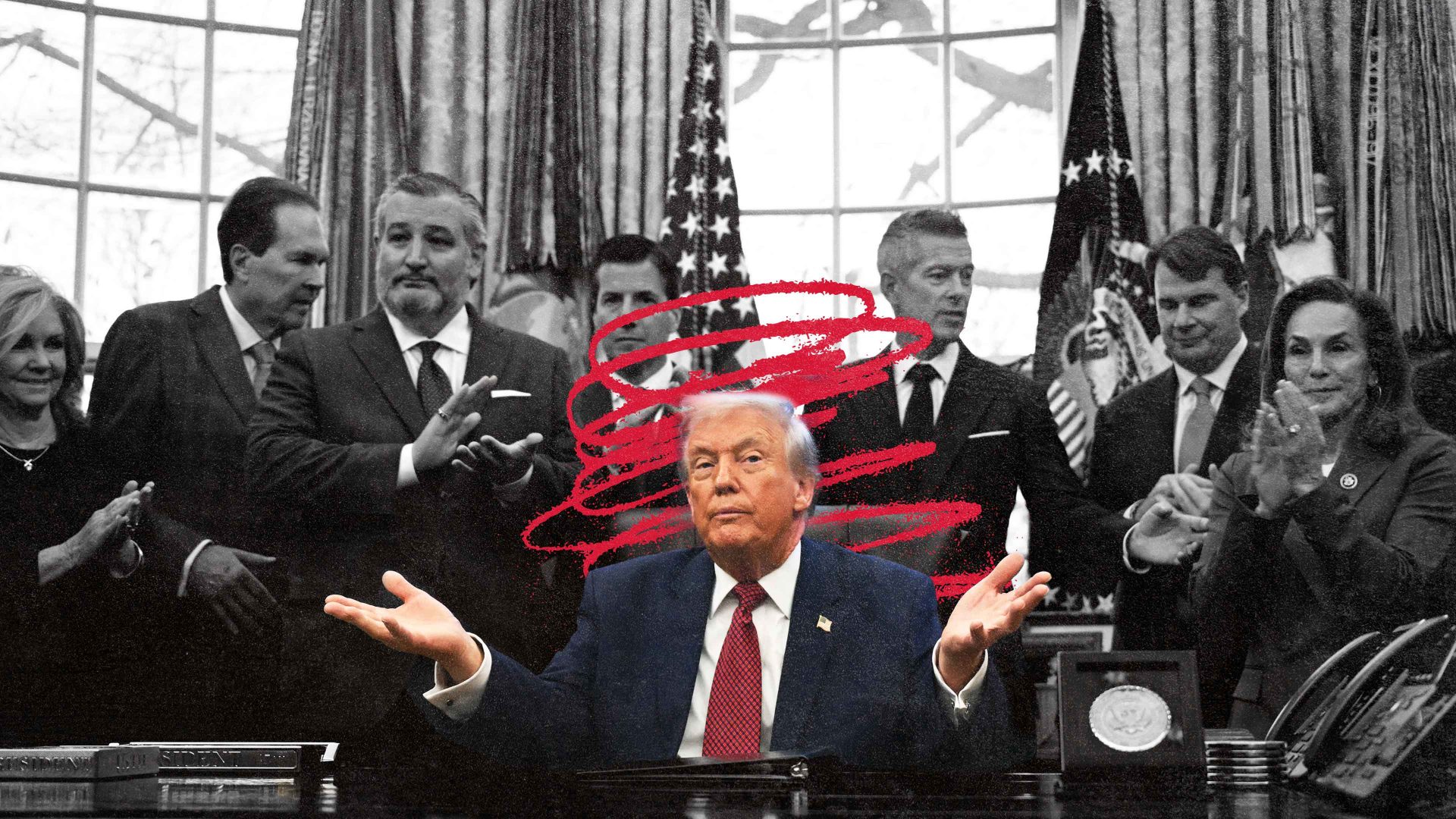
Alastair Campbell’s Diary: How we must fight the 3Cs in 2026
Crime, corruption and cruelty show how leaders like Trump and Bukele exploit power, and why they must be stopped... Continue
31 December 2025

168. A Climate Special: Populism, Security, and Leadership
Can the planet sustain infinite economic growth, or is GDP a flawed metric? Is the UK genuinely decarbonising, or is it simply outsourcing its pollution? How can politicians defeat the populi... Continue29 December 2025
Posted by Alastair Campbell
482. A Trumpian Year, the Politics of Hope and Highlights of 2025
What surprised Rory and Alastair most about 2025? Why does Trump's presidency feel even more chaotic than expected? And who gets their vote for campaigner of the year? Join Rory and Alastair... Continue25 December 2025
Posted by Alastair Campbell
481. Polanski, Macron & al-Sharaa: The Best & Worst Politicians of 2025
Who deserves the title of UK politician of the year - and who gets worst? What was the most consequential moment of Trump's presidency so far? And can Rory convince Alastair that Christmas is... Continue24 December 2025
Posted by Alastair Campbell
167. Faith, Depression, and Finding Calm in the Chaos (Professor Mark Williams)
From Parliament to Prison, how can people find calm in chaotic environments? How does one cope with grief during the festive period? What are some successful ways to combat depression? Rory... Continue22 December 2025
Posted by Alastair Campbell
19 December 2025
Posted by Alastair Campbell


Do the producers of alcohol make political donations?
As anyone who happens to glance over my twitter feed every now and again, you will see quite a few booze related tweets. I like a drink every now and again but because of past experiences, I don’t drink anywhere nearly as much as I used to. However, I noticed a while back that I still behave as though I’m a very social drinker ( getting to the point I promise), I encourage others to have a drink when they’ve had a bad day or are celebrating. I think it’s one of our main problems with booze, our attitude seems to be that we *need* a drink. That somehow we having a drink makes us more socially accepted. Having spoken to friends I know that some us at least are on autopilot when it comes to our attitude to booze.
So apart from our attitude I think as a nation we’d benefit from returning to a little bit more regulation, I’m not being a killjoy and I know we’re all broke, but does booze need to be that cheap? And do we need to be able to buy it from a supermarket at any time of day or night? I wonder how many of us could give up alcohol totally for longer than a month. I genuinely don’t think I could, so maybe it’s time I did.
remind me to proof read my post next time
Isn’t part of the problem that policy makers think about drugs differently depending on whether they’re legal or illegal, so there are different strategies for drugs, alcohol and tobacco. Perhaps if we were able to persuade them to look at it from the point of view of how society wants to intervene – prevention, treatment, law – that might make sense.
As someone who’s professional role is in drug and alcohol prevention I know that the best interventions work across all a range of substances and often don’t focus on one or the other.
I also know that if you look at where government invests, across the piece, that much more is spent on enforcement (police, prison, boarder control) than on treatment; and that almost nothing is spent on prevention.
Two points: funding data on alcohol treatment need to consider that AA is completely unsupported by government.
Second, liver dieases are worsened considerably by being obese, and there is a strong synergistic effect between obesity and heavy drinking. So when considering alcohol-related liver disease stats, we need to take our obesity rates into consideration.
Don’t do top shelf, but like the pumps, as many in UK. Supermarket wines I did dabble in sadly in past, but no more, that became popular with the ladies, with the aisled marketing, sadly.
The top shelf in some do take over control, that is when it does go overboard, when you like that too much, vodka bottles everywhere empty, since it doesn’t make your breath pong like a brewery, but eventually it starts sweating out of your skin pores, with that certain alcohol COOH smell. Then you get noticed, even though you claim you are still “functional”.
Funny stuff alcohol, embedded in UK life, as part of our civilised body chemistry.
I work with offenders and it has been noticeable how, over the last decade, alcoholism has become the predominant common factor in their backgrounds, allied with mental health. There are still lots of heroin / speed / cocaine misusers out there but they are using up proportionately less time of criminal justice and social care agencies.
Simon Malloni, Cornwall
The Brits have a “war on drugs” too? Come on, I thought you were smarter than that.