

Europe needs to get real on defence; Britain needs to get real on Europe
13 February 2025


Post
4 September 2013

2 minute(s) read
Recent Posts
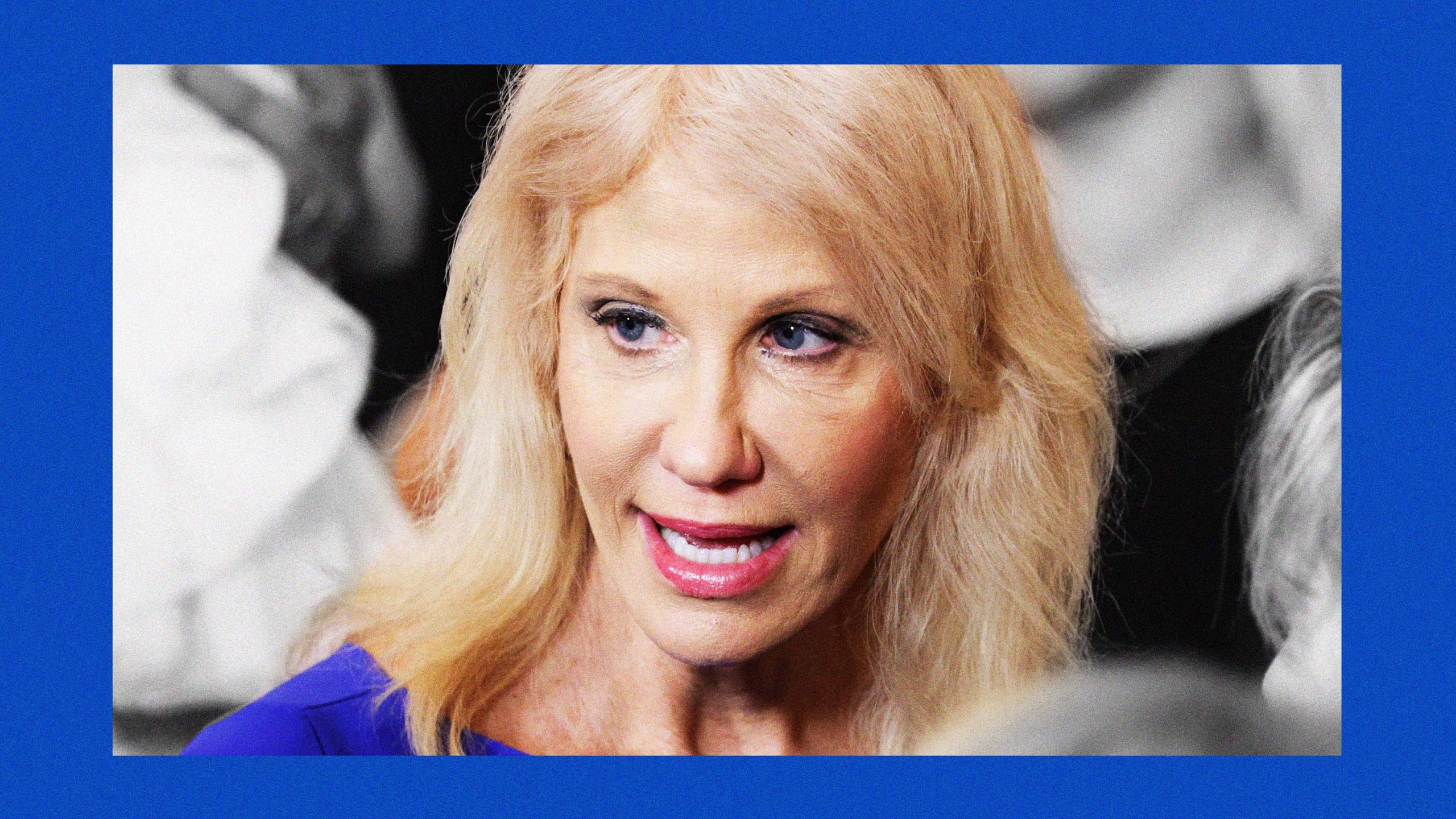
Alastair Campbell’s diary: My truly deranged encounter with Trump apologist Kellyanne Conway
The godmother of ‘alternative facts’ assured me the president loved Zelensky – just as he was stabbing him in the back with Putin... Continue
14 October 2026
Posted by Alastair Campbell
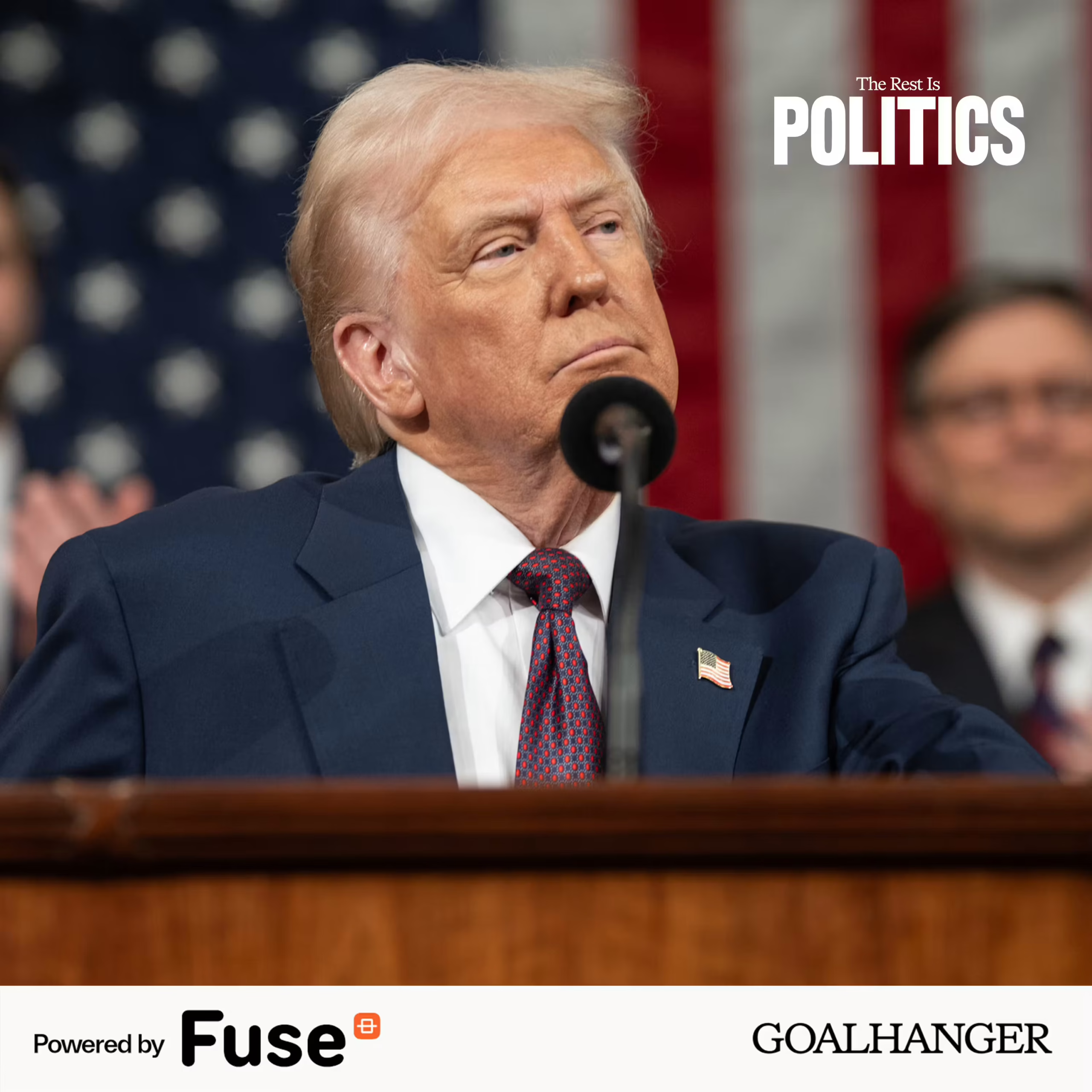
579. Trump’s Public Execution Order and Burnham’s Brexit Intervention
How does Marco Rubio’s Parthenon speech fit the Trump administration’s ideas on European “civilisational erasure” – and how does it depart from traditional Republican rhetoric? With Pete Heg... Continue14 October 2026
Posted by Alastair Campbell
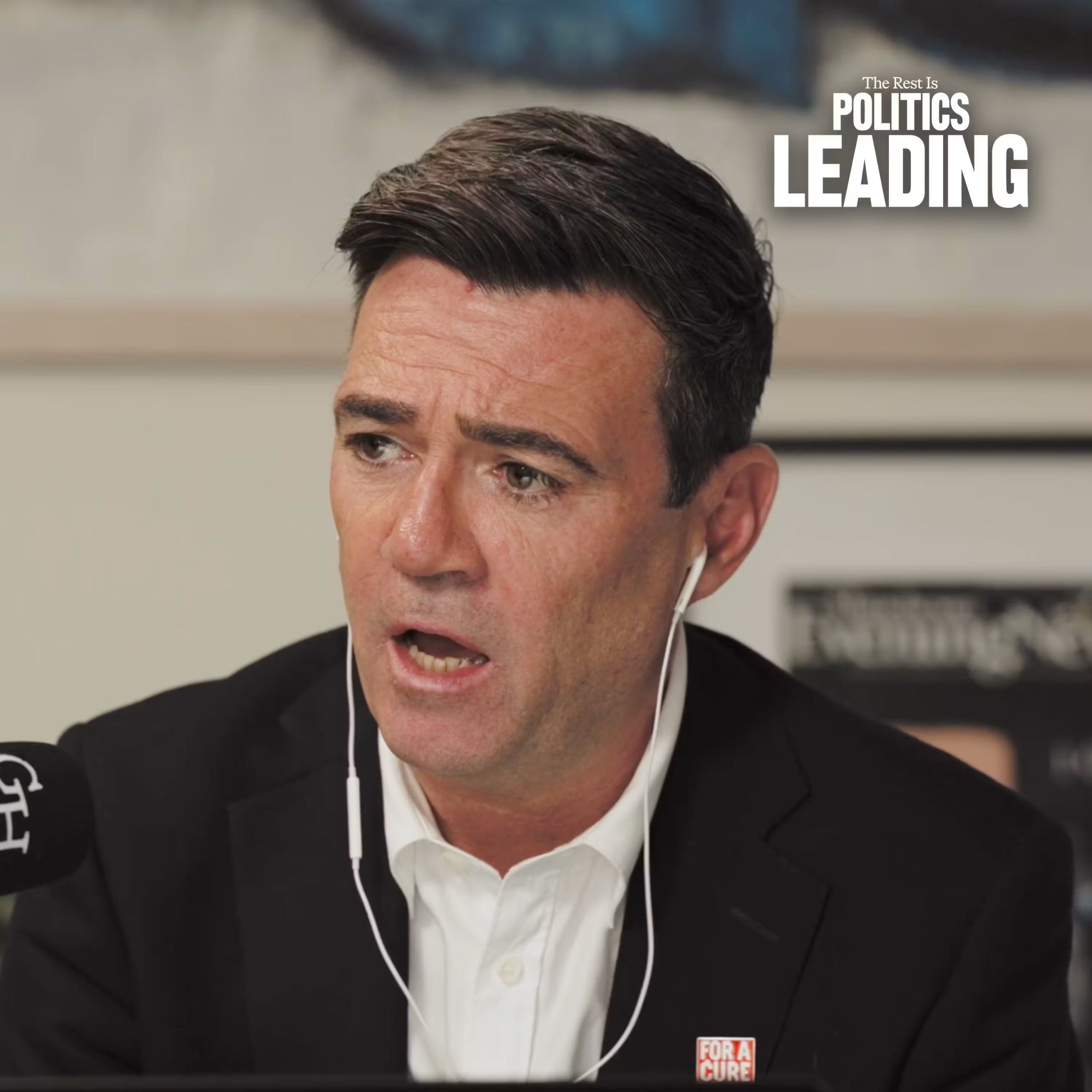
210. Andy Burnham: My Relationship With Starmer, Brexit Lies and Emotion in Politics
How will he change Britain’s relationship with the EU? Why has he agreed to publish details of meetings following the Manchester City scandal? With the Trump administration planning to livestream a ... Continue12 October 2026
Posted by Alastair Campbell
Oct
22
2026
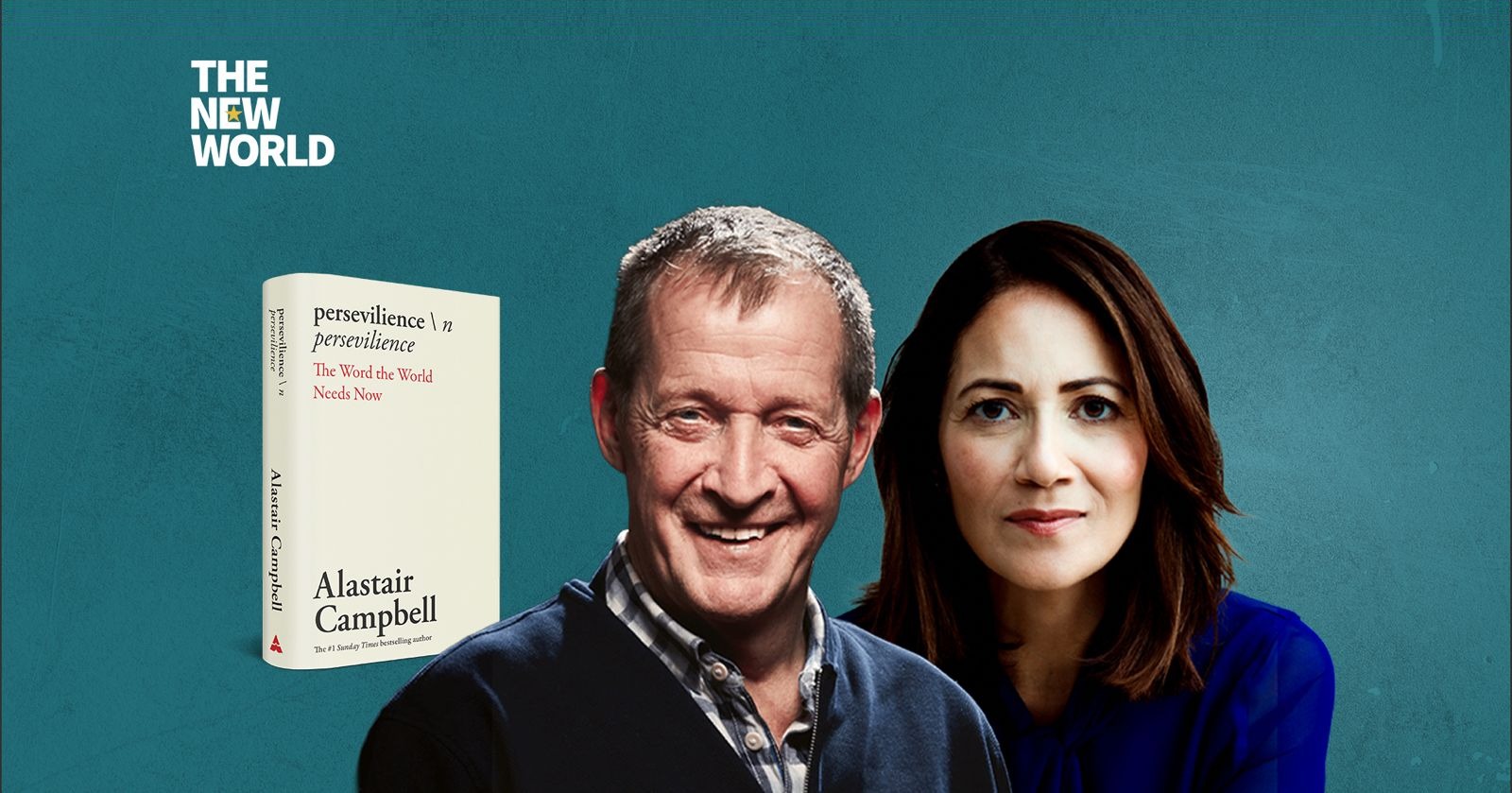
Alastair Campbell and Mishal Husain live at Cadogan Hall
He’s invented a word. He says it’s the word the world needs now. She’s going to make him explain why. Alastair joins acclaimed broadcaster Mishal Husain on stage to discuss his new book, Per... ContinuePosted by Alastair Campbell

578. Alastair and Michael Gove Disagree Agreeably on Brexit and Israel
Will there be another EU referendum, despite Andy Burnham promising not to re-run old Brexit arguments? Will Michael Gove ever criticise Israel's actions in Palestine, and if not, why not? What do the... Continue8 October 2026
Posted by Alastair Campbell
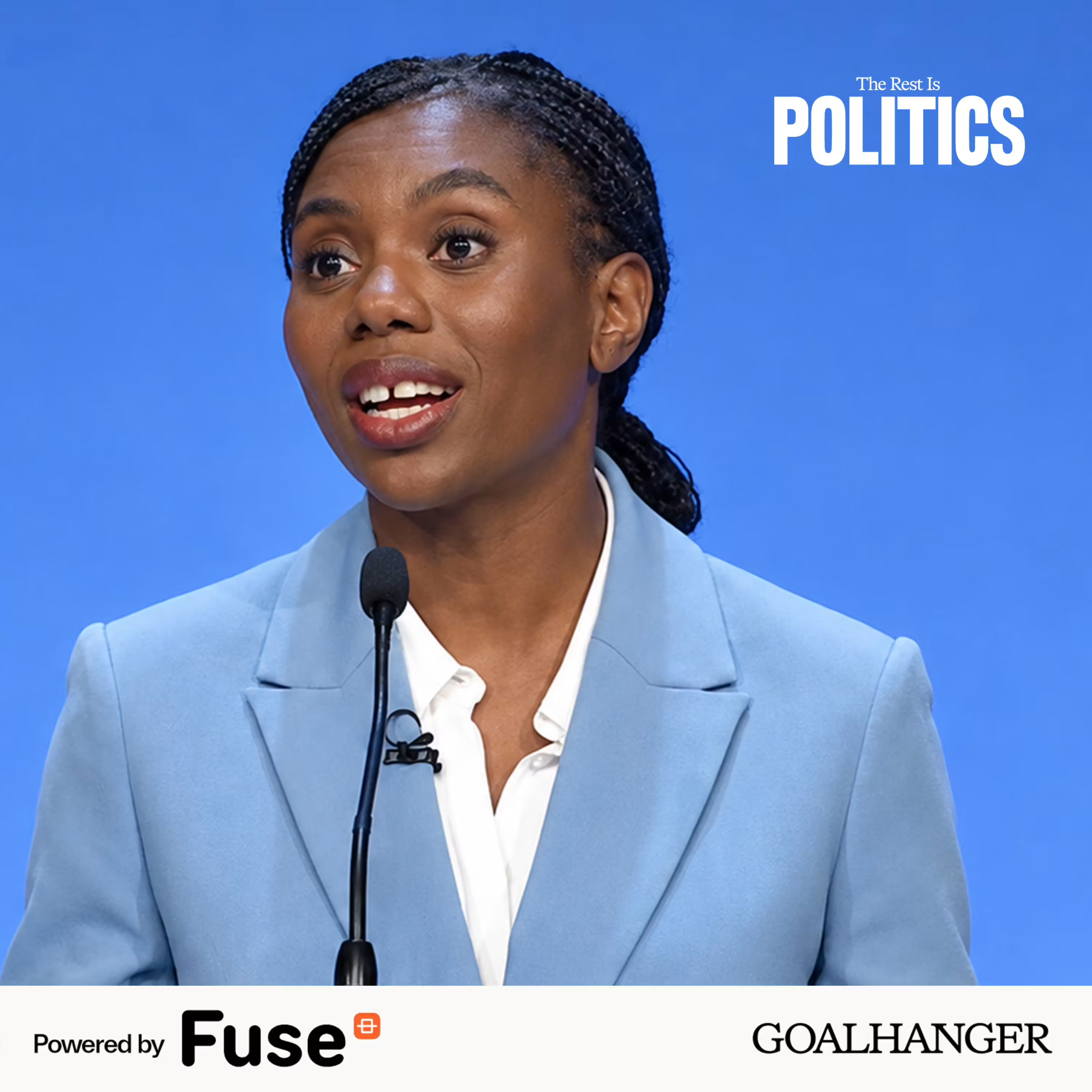
577. Is Badenoch Finally Stopping Farage and Why Are French Schools on Fire?
With Reform bogged down in scandal, and Kemi Badenoch setting out her political vision at Conservative Party conference, have the Tories finally wrestled momentum on the right of British politics away... Continue7 October 2026
Posted by Alastair Campbell

6 October 2026
Posted by Alastair Campbell
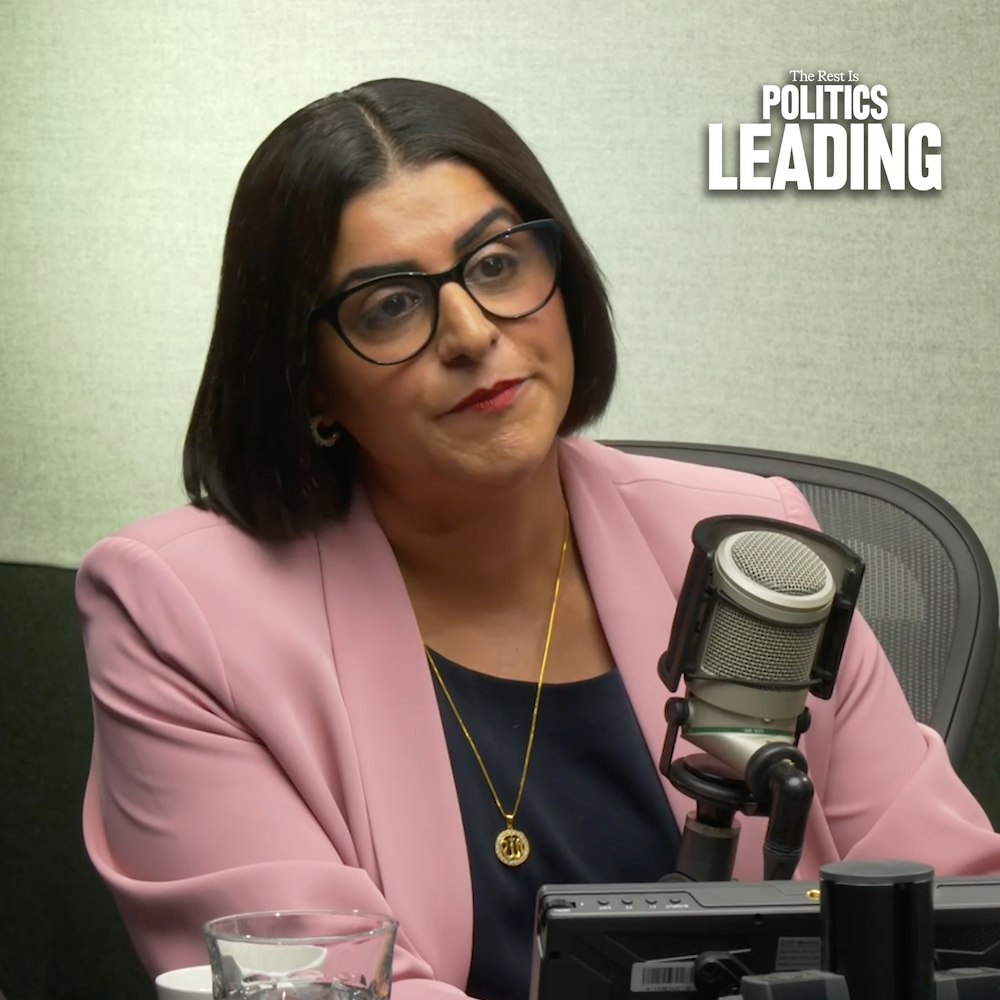
209. Shabana Mahmood: Palestine Action, Faith and What I Told Starmer
Is the government's ban on Palestine Action lawful, or overreaching? Why can't Britain just send small boats straight back to France? Can faith and public duty coexist in modern British politics? Ro... Continue5 October 2026
Posted by Alastair Campbell



Do the producers of alcohol make political donations?
As anyone who happens to glance over my twitter feed every now and again, you will see quite a few booze related tweets. I like a drink every now and again but because of past experiences, I don’t drink anywhere nearly as much as I used to. However, I noticed a while back that I still behave as though I’m a very social drinker ( getting to the point I promise), I encourage others to have a drink when they’ve had a bad day or are celebrating. I think it’s one of our main problems with booze, our attitude seems to be that we *need* a drink. That somehow we having a drink makes us more socially accepted. Having spoken to friends I know that some us at least are on autopilot when it comes to our attitude to booze.
So apart from our attitude I think as a nation we’d benefit from returning to a little bit more regulation, I’m not being a killjoy and I know we’re all broke, but does booze need to be that cheap? And do we need to be able to buy it from a supermarket at any time of day or night? I wonder how many of us could give up alcohol totally for longer than a month. I genuinely don’t think I could, so maybe it’s time I did.
remind me to proof read my post next time
Isn’t part of the problem that policy makers think about drugs differently depending on whether they’re legal or illegal, so there are different strategies for drugs, alcohol and tobacco. Perhaps if we were able to persuade them to look at it from the point of view of how society wants to intervene – prevention, treatment, law – that might make sense.
As someone who’s professional role is in drug and alcohol prevention I know that the best interventions work across all a range of substances and often don’t focus on one or the other.
I also know that if you look at where government invests, across the piece, that much more is spent on enforcement (police, prison, boarder control) than on treatment; and that almost nothing is spent on prevention.
Two points: funding data on alcohol treatment need to consider that AA is completely unsupported by government.
Second, liver dieases are worsened considerably by being obese, and there is a strong synergistic effect between obesity and heavy drinking. So when considering alcohol-related liver disease stats, we need to take our obesity rates into consideration.
Don’t do top shelf, but like the pumps, as many in UK. Supermarket wines I did dabble in sadly in past, but no more, that became popular with the ladies, with the aisled marketing, sadly.
The top shelf in some do take over control, that is when it does go overboard, when you like that too much, vodka bottles everywhere empty, since it doesn’t make your breath pong like a brewery, but eventually it starts sweating out of your skin pores, with that certain alcohol COOH smell. Then you get noticed, even though you claim you are still “functional”.
Funny stuff alcohol, embedded in UK life, as part of our civilised body chemistry.
I work with offenders and it has been noticeable how, over the last decade, alcoholism has become the predominant common factor in their backgrounds, allied with mental health. There are still lots of heroin / speed / cocaine misusers out there but they are using up proportionately less time of criminal justice and social care agencies.
Simon Malloni, Cornwall
The Brits have a “war on drugs” too? Come on, I thought you were smarter than that.