

Europe needs to get real on defence; Britain needs to get real on Europe
13 February 2025


Post
28 November 2009

3 minute(s) read
Recent Posts

183. From Bradford to Westminster: Faith, Identity, and Power (Naz Shah)
How did Naz Shah’s experience growing up in Bradford and her experience with her family in the legal system influence her to go into politics? What does it mean for a political party to truly “sta... Continue6 April 2026
Posted by Alastair Campbell

The Real Reasons Populism Is Taking Over
What is populism, and why is it so attractive to voters? Which human instincts do populists tap into to get votes? And what does a populist-led country look like? Alastair is joined by Liam Byrne, MP... Continue2 April 2026
Posted by Alastair Campbell
517. Is Trump Plotting Regime Change in Cuba? (Question Time)
Does Trump already have one eye on regime change in Cuba, as the US faces strategic failure in the Iran war? Who is more dangerous to the world right now, Putin or Netanyahu? Should Starmer be doing m... Continue2 April 2026
Posted by Alastair Campbell
516. Trump’s Iran Delusion and the Limits of American Power
Why has opposition to the Iran war been so muted within Trump’s America, and how is the US uniquely insulated from the worst impacts of the war? Do American tech billionaires now pose a serious thre... Continue1 April 2026
Posted by Alastair Campbell
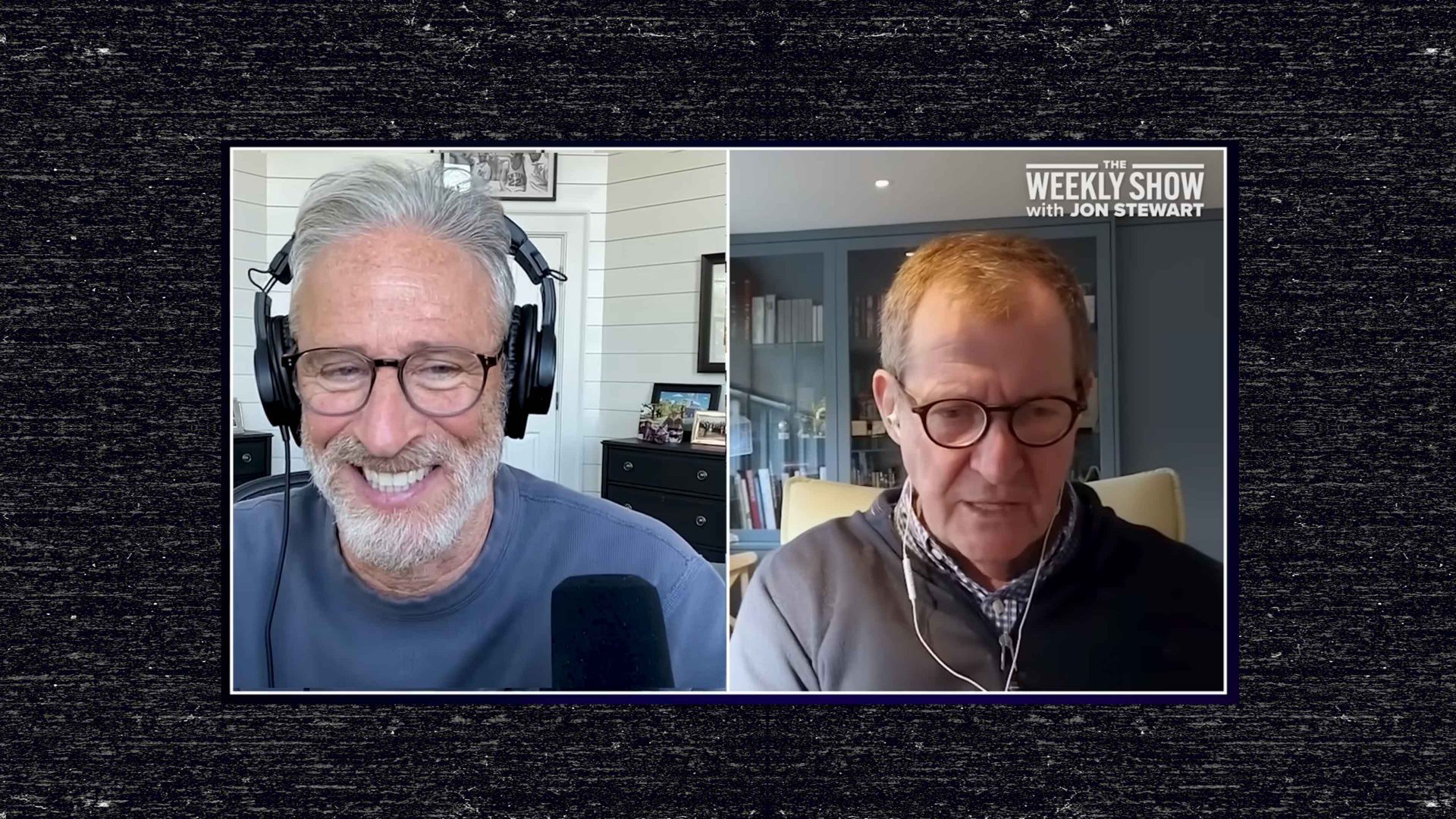
Alastair Campbell’s diary: How Jon Stewart told me the brutal truth about Trump and Hegseth
A tour of top podcasts featured savagings of Brexit – and the man baby in the White House... Continue
1 April 2026
Posted by Alastair Campbell
Nineteen Eighty-Four: Big Brother, Surveillance, and Fear (The Book Club)
Why is 1984 as relevant today as when it was published? Who is Big Brother, and why is he so powerful? What was George Orwell's intention when creating the world of 1984, and what does it tell us abou... Continue30 March 2026
Posted by Alastair Campbell
182. Culture Wars, Identity, and What Needs To Change In Congress (Sarah McBride)
How are rights for trans people in the US improving or worsening under the Republican administration? What fundamentally needs to change in Congress to improve the state of politics? Are the Democrats... Continue30 March 2026
Posted by Alastair Campbell
515. Starmer’s Foreign Aid Betrayal, Islamophobia & Australia’s Far Right (Question Time)
Are the UK government’s aid cuts more extreme than those made under austerity and Trump? What can Britain learn from South Australia's landslide against the far-right? Have the Tories & Reform a... Continue26 March 2026
Posted by Alastair Campbell


Nice read. It makes you wonder – especially the bit about him being ridiculed at the time – whether for example those who are now warning of climate change disaster are being listened to too late. Or whether those calling for legalisation of drugs are ahead of their time. It is always interesting to see the difference between eventually accepted conventional wisdom, and the pain of those who are trying to get it accepted in the first place
I usually come on here for a good old fashioned dose of Tory bashing, of which there is not nearly enough going on may I say, so thanks for that. But I like it when you have the odd break from politics and induldge in a bit of musing. The Prof sounds quite a spirit
Duly inspired, I will do my long run of the week … in training for first marathon
Hi Alistair
Thanks for telling us about Professor Morris
A true champion of the people especially to speak out on health inequalities & It makes me emotional that certain illnesses only occur in the less well off in society. This is why Labour must win the battle to eradicate Poverty.
Alastair my dear……..you make no mention of your current excercise programme or health regime?????????????…………..Mine consists of a minimum of 4 racketball games a week at an age no longer disclosed……..I think it’s really time we all got off our backsides.
Remember, when you appear before Chiolcot – you believed everything that you were told by the intelligence services.