

Europe needs to get real on defence; Britain needs to get real on Europe
13 February 2025


Post
2 March 2009

4 minute(s) read
Recent Posts
Addiction, Breakdown and Finding Persevilience: Rory Interviews Alastair
How has Alastair managed to come back from some of the darkest places in his life, overcoming a breakdown while in the public eye? Is his obsession with work unhealthy, or necessary to achieving great... Continue16 October 2026
Posted by Alastair Campbell

580. How to Solve Britain’s Youth Unemployment Crisis
In Britain, we spend £25 on benefits for every £1 we spend helping young people find work. So why have successive governments failed to fix this – and what does Alan Milburn’s review, due this a... Continue15 October 2026
Posted by Alastair Campbell

Alastair Campbell’s diary: My truly deranged encounter with Trump apologist Kellyanne Conway
The godmother of ‘alternative facts’ assured me the president loved Zelensky – just as he was stabbing him in the back with Putin... Continue
14 October 2026
Posted by Alastair Campbell
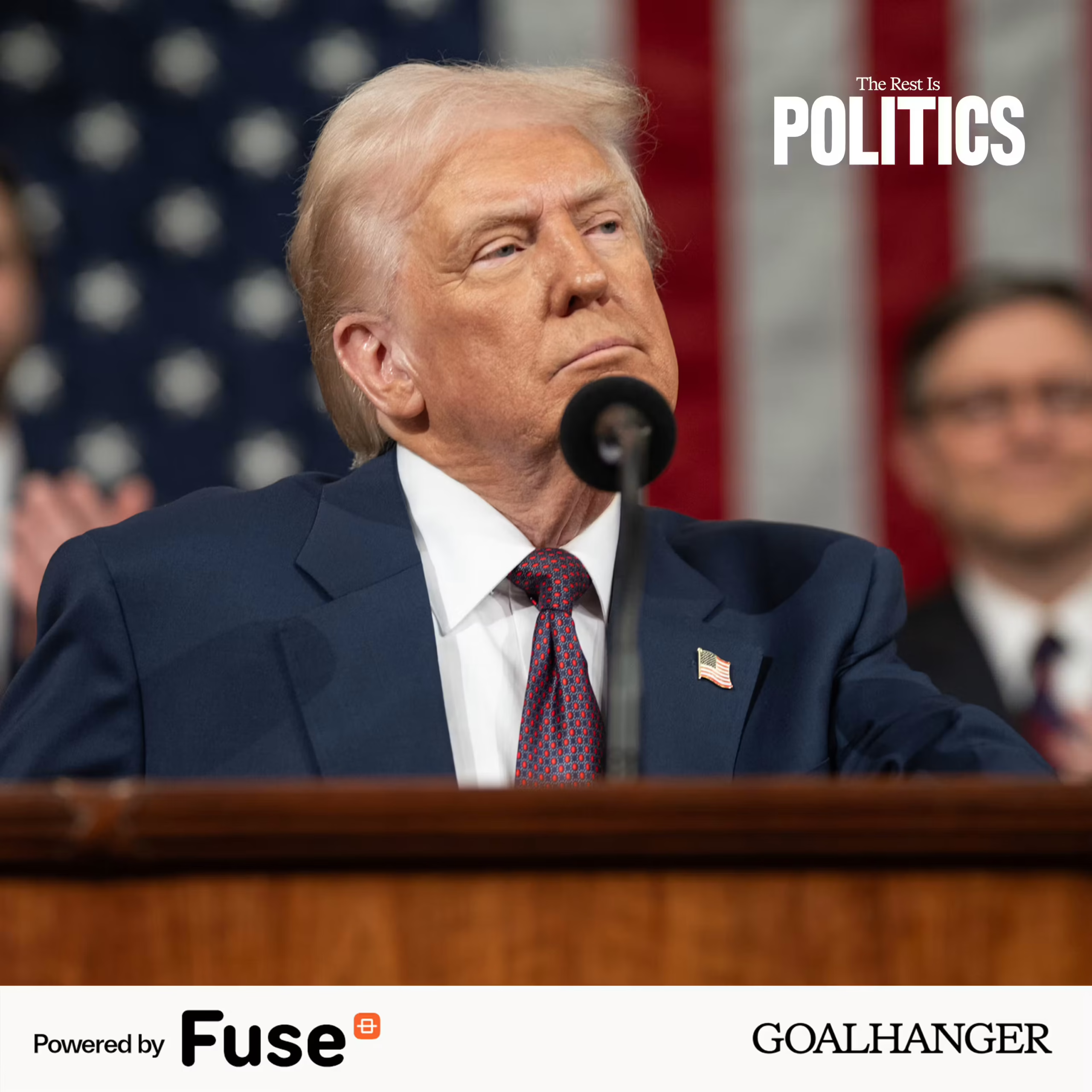
579. Trump’s Public Execution Order and Burnham’s Brexit Intervention
How does Marco Rubio’s Parthenon speech fit the Trump administration’s ideas on European “civilisational erasure” – and how does it depart from traditional Republican rhetoric? With Pete Heg... Continue14 October 2026
Posted by Alastair Campbell
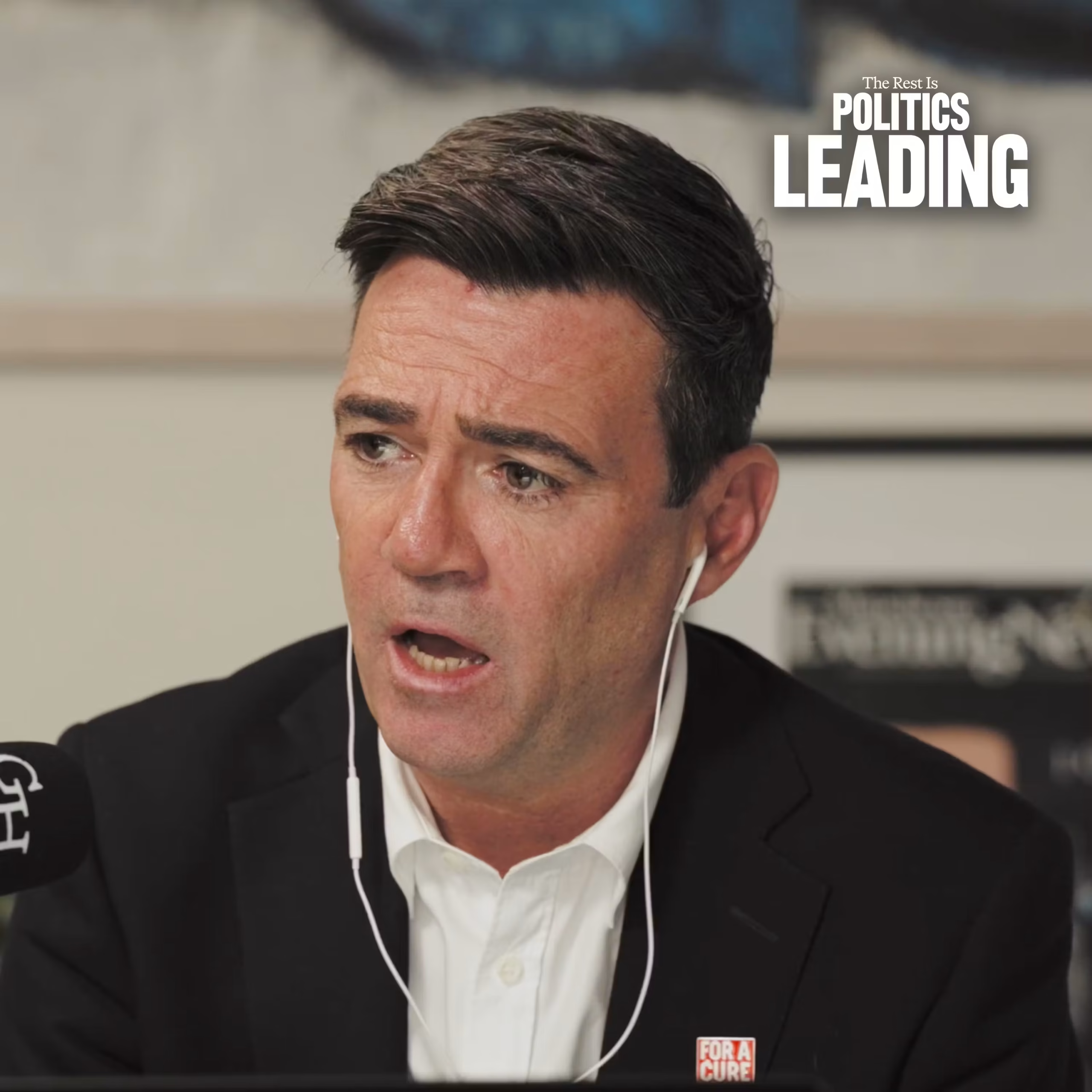
210. Andy Burnham: My Relationship With Starmer, Brexit Lies and Emotion in Politics
How will he change Britain’s relationship with the EU? Why has he agreed to publish details of meetings following the Manchester City scandal? With the Trump administration planning to livestream a ... Continue12 October 2026
Posted by Alastair Campbell

Oct
22
2026
Alastair Campbell and Mishal Husain live at Cadogan Hall
He’s invented a word. He says it’s the word the world needs now. She’s going to make him explain why. Alastair joins acclaimed broadcaster Mishal Husain on stage to discuss his new book, Per... ContinuePosted by Alastair Campbell
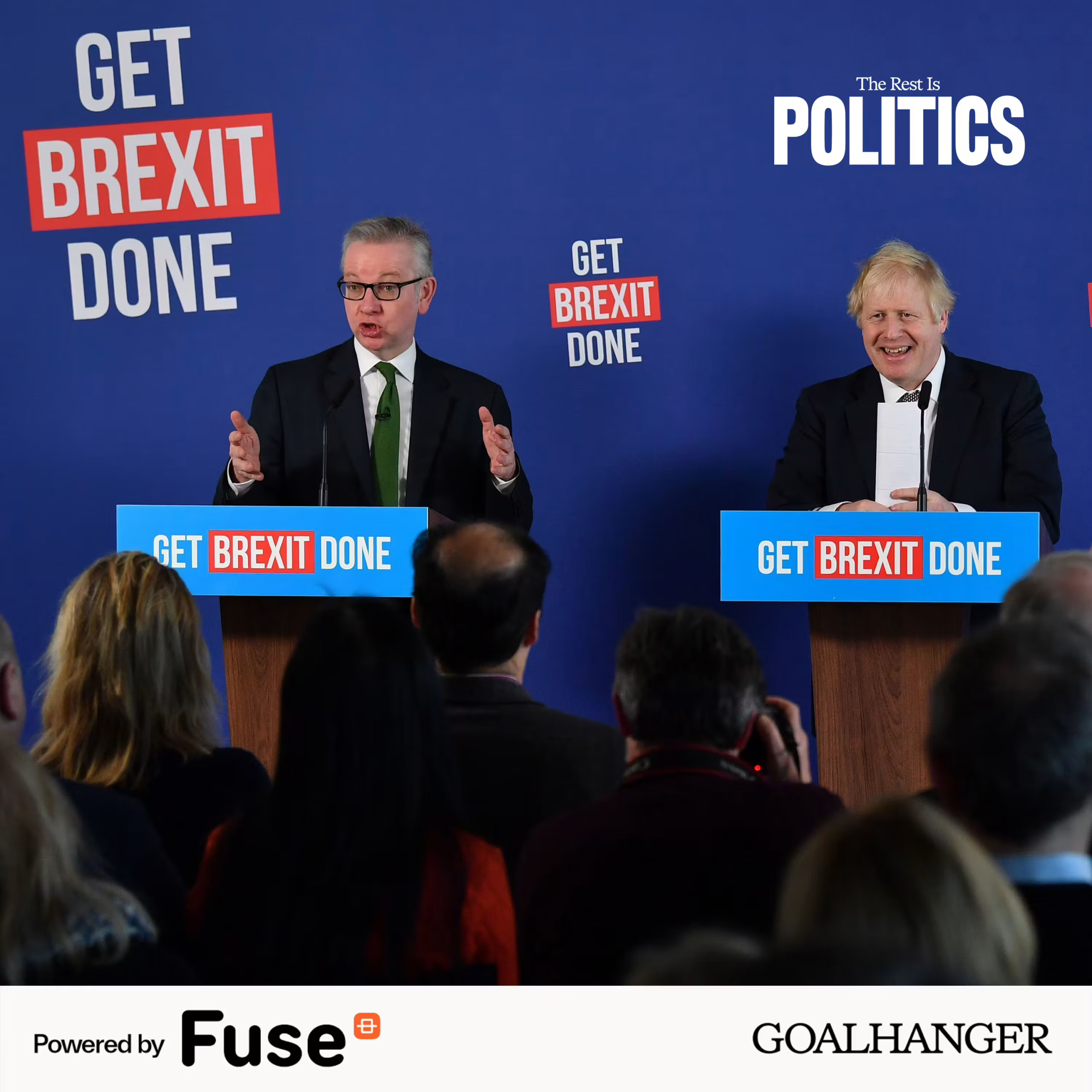
578. Alastair and Michael Gove Disagree Agreeably on Brexit and Israel
Will there be another EU referendum, despite Andy Burnham promising not to re-run old Brexit arguments? Will Michael Gove ever criticise Israel's actions in Palestine, and if not, why not? What do the... Continue8 October 2026
Posted by Alastair Campbell
577. Is Badenoch Finally Stopping Farage and Why Are French Schools on Fire?
With Reform bogged down in scandal, and Kemi Badenoch setting out her political vision at Conservative Party conference, have the Tories finally wrestled momentum on the right of British politics away... Continue7 October 2026
Posted by Alastair Campbell



Before the usual ‘paragraphs!!’ complaints, I DO use them but for some reason when I submit the blog to the site, the paragraph breaks are not always included. Hence the unpleasant slab of words on the other side of the screen. Irritating but being checked out
You may need to insert some HTML code to add paragraph breaks.
I see that the US is donating $900 miIIion to rebuiId Gaza. PresumabIy this is ‘budget neutraI’ for the US as it wiII recoup the cash from the saIe of ‘smart’ bombs to IsraeI.
In addition to the usual ‘special relationship’ fodder, I hope that GB can do some practical good in his speech; maybe invite Americans to visit us more cheaply than ever, or to consider our now bargain priced goods and services… a mention for our film industry services and facilities might be too much to ask!
P.S. I hope the term “unpleasant slab of words” doesn’t come back to haunt you!
The bits about Tony being nervous before big speeches were among my favourite bits in your diaries.
For some reason, though I’ve never been in a comparable situation, I could really relate to the idea that he had to get himself really worked up in what seemed to be quite an unhealthy way to do a speech well.
PS: I must be just about the only politically-minded person in Britain who just doesn’t find US politics interesting. Good of Gordon to go over and make it a bit more exciting for me! 😉
Alastair, no need to apologize or explain yourself for these technical glitches. I read the blog before the breaks were inserted… and, oh my gosh, I didn’t die! I am not sure what shallow creep would have complained about that… In this instance, it’s content and message that matter and not form.
Moving on to serious things, your piece is right on target! I will be there when GB speaks, and have seen many other foreign leaders address Congress. You get a sense of the magnitude of these speeches not only from the build-up to the event (the volume of information/talking points passed around from congressional office to congressional office, all the speculation) but also from the moments following it, with Members of Congress reacting to the speech.
However, the vibe of the House Chamber is the best indicator of the significance of it all. I was there in 2006 when then Israeli PM Ehud Olmert addressed Congress, and you could cut the tension with a knife, given that the Lebanon war was unfolding simultaneously.
I think GB will encounter a friendly frame of reference with his audience, given that Democrats have majority in both houses. Also, considering U.S. media coverage of him, I suspect he will also be welcomed for his leadership in the global financial crisis. I am looking forward to the speech!
Alastair, some blogging software editors have a manual option to “preserve line breaks” or some such.
Hope this helps!