
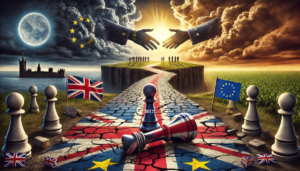
Europe needs to get real on defence; Britain needs to get real on Europe
13 February 2025


Post
17 December 2010

5 minute(s) read
Recent Posts
212. What Happens When The World Stops Trusting America? (Michael Lewis)
Why did Elon Musk really go to Washington, and was DOGE ever about cutting government at all? What happens when the world stops trusting America, and could the next financial crisis already be under w... Continue26 October 2026
Posted by Alastair Campbell
Kim Leadbeater, MP: My Sister’s Murder and Why I Never Wanted To Go Into Politics
This week, we bring you one of Alastair’s favourite interviews. He’s joined by Kim Leadbeater MP, whose sister Jo Cox was murdered in 2016, and his lifelong friend Lindsay Nicholson, who lost her ... Continue23 October 2026
Posted by Alastair Campbell
582. Netanyahu’s Fight for Survival and the Gaza Film That Shocked Rory and Alastair
What is at stake for Israelis and Palestinians in the upcoming parliamentary elections and, if Netanyahu loses, will anything actually change given the major parties reject a two state solution? Why d... Continue22 October 2026
Posted by Alastair Campbell
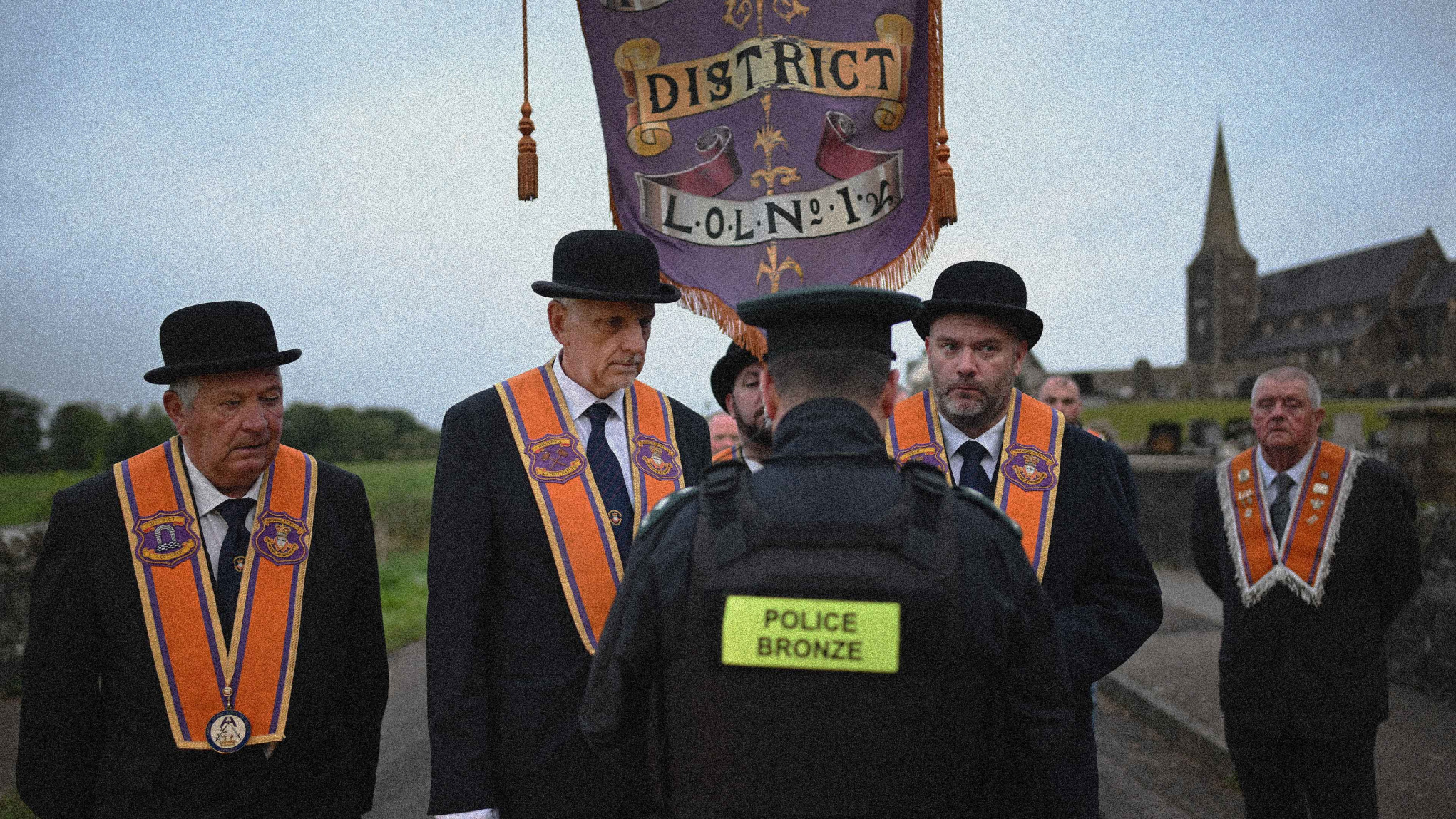
Alastair Campbell’s diary: The truth that Northern Ireland has never confronted
The annual crisis over Protestant marches might have been avoided had we followed Mandela’s example... Continue
21 October 2026
Posted by Alastair Campbell
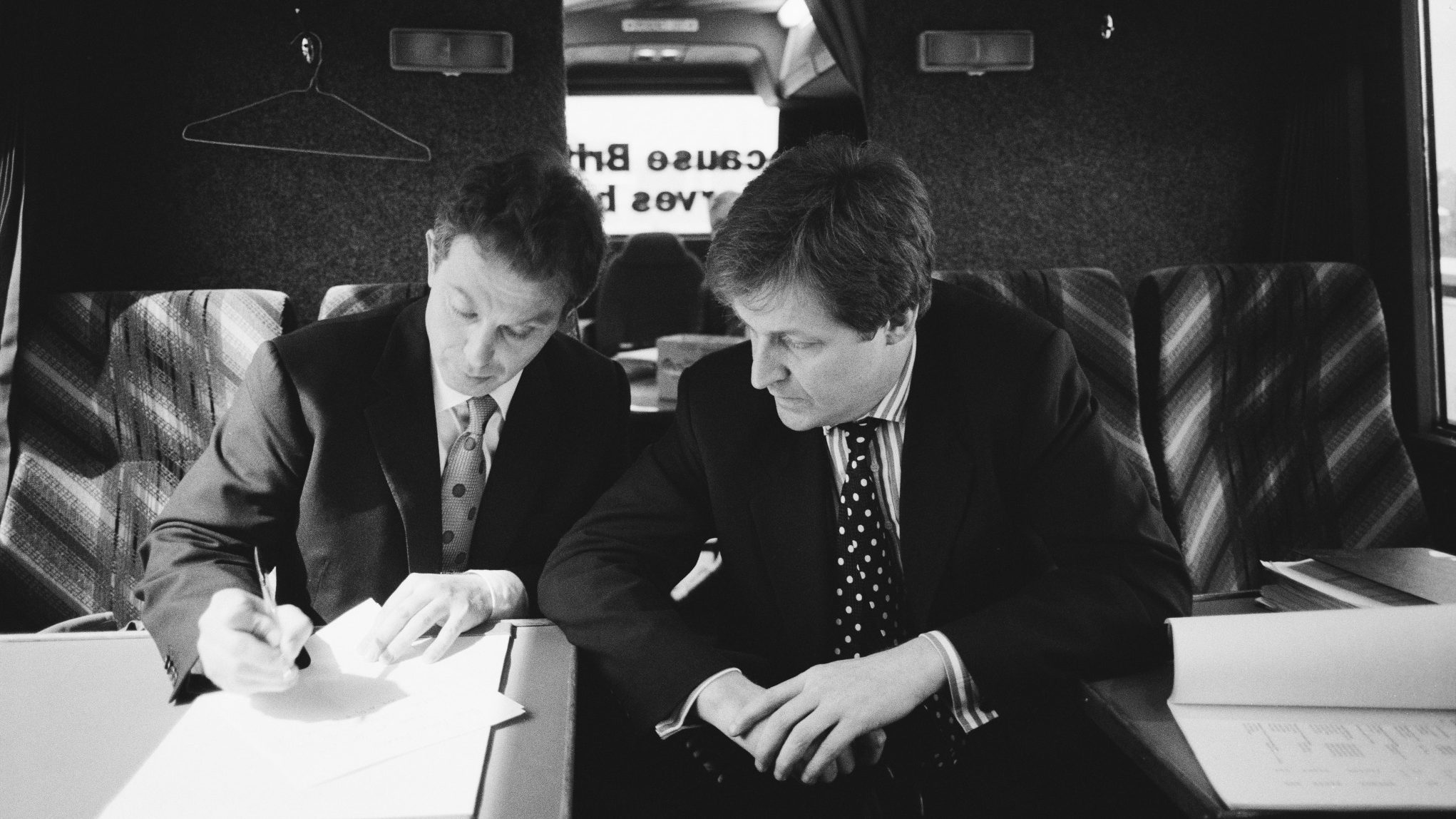
EXCLUSIVE EXTRACT: The art of surviving a political crisis
In an exclusive extract from his brilliant new book Persevilience, Alastair Campbell reflects on his time at the heart of the New Labour media operation, and what it taught him... Continue
21 October 2026
Posted by Alastair Campbell
EXCLUSIVE EXTRACT: The power of talking to dead people
Our parents, friends and colleagues pass away – but their memories, their values and the advice we think they would give us live on... Continue
21 October 2026
Posted by Alastair Campbell
581. Trump and Putin vs. Zelensky: Is Europe Sleepwalking into Disaster?
After another devastating week for Ukraine, is Trump now firmly on Putin’s side, and how much leverage does Elon Musk have over Zelensky’s war effort through his ownership of Starlink? With more c... Continue21 October 2026
Posted by Alastair Campbell
211. Trump’s Niece on Why He’s On Putin’s Side
How did Donald Trump’s childhood shape the president we see today? Why was Mary Trump cut out of her grandfather’s billion-dollar will? Why does he want to see Europe fail? Alastair and Rory are j... Continue19 October 2026
Posted by Alastair Campbell


If Assange’s “sex crimes” relate, as reported, to not using a condom during consensual sex (or one splitting during use) he is hardly an exemplar of male oppression.
I’m sure you have your very good and altruistic reasons for adding to his personal vilification though. Maybe you should be a little more transparent about them.
Shame you cannot show the pictures but FT paywall?? Murdoch gets in neck but they do the same …
I agree Alastair that photographs are used to illustrate present attitudes. Not least the awful ones of Gordon Brown towards the end of the Labour years. One thing to remember though the media view of men is largely defined by men and they see things differently from women. Clegg to me has always had the polished look of a lightweight and not particularly manly in rugged way. Julian Assange always looks a little strange whereas I have not seen a bad picture of Obama. He has a natural athleticism that politicians in the main lack. Perhaps if more women’s views are taken by picture editors we might have different pics
Clegg is getting what he deserves. He posed as a different kind of politician and is actually worse than the Tories. Osborne actually believes in what he is doing, Clegg supports it because it means he stays in power. But he will not be there for long.
Good point about the media just talking to each other. 24 hour news in particular is now just a journalist talking shop, and boring as a result
Print is an inherently exclusive media. It has never been able to publish all the information it could. As such it has always been, objectively, a as much a means of censorship as distributing ‘truth’ or ‘conventional wisdom’. And the reliance of newspapers on their advertisers mean that they have significant control over editorial policy. Which redefines conventional wisdom with every twist and turn of the property market (especially).
The advent of open-source journalism, from Assange to the 12 year old Masai boy uploading videos via his OX1, flows information around this traditional barrier like a river around a shopping trolley.
The new, global conventional wisdom is based on this access to the means of production, distribution and exchange, and has many implications, not least for the defunct concept of the nation state, a relic of the steam age, and one in dire need of re-evaluation. No wonder politicians are shaking in their shoes.
The Assange business makes me uncomfortable on several levels – both in his defence and not.
Assange claims the ground of the whistleblower yet most whistleblowers see ONE major wrong and put themselves at considerable personal risk over the ONE issue to attempt to right that ONE wrong.
Instead we are seeing more of the prerogative of the lady of the night throughout history – power without responsibility – to publish a string of items without us knowing whether they are a complete set of wrongs or selected. If selected we cannot check if there is bias in that selection because we cannot know what is being held back.
As to the other stuff – ?
Alastair – it would be good to hear your views on Assange as a journalist. He claims to be a publisher and an investigative journalist, yet it appears that he merely passes on the metaphorical brown envelope to media outlets without any checks or verifications. Surely an investigative journalist would seek to verify a leak from a number of sources before publishing? I agree that there is something weird and victim-like about him. Whether he is a sex offender remains to be seen.
It’s more of a register wall than a paywall. Prefer the FT way of doing it – limited articles free – lots of articles expensive…
Alastair, thank you for the blog. I’m just going to float a thought. A thought I had as I walked back from the newsagents with my copy of the Guardian this lunchtime. I wondered if I paid more money – let’s say 40p more per day – whether the Guardian would produce a run of the paper that doesn’t have anything about WikiLeaks in it? I’m bored of it now and I wasn’t that interested in the first place. The initial shock revelations weren’t that shocking and now it is just dragging on an on. Maybe it will be safe to go back to the Guardian in Easter – they might have worked through the memory stick by then.
Great blog post. Couldn’t agree more about Nick Clegg and Julian Assange. That latter is so annoying. He was let free and immediately dissed the British justice system. He thinks he is some sort of champion of justice, when the reality is he’s a hacker accused of sex offences who runs a website which publishes people’s secrets. What a nerd.
Conventional wisdom has huge inertia though. Once ingrained, it’s very difficult to shake. What is most likely to save Obama is that he is currently being compared to expectations. Come the next election he will be compared to anther candidate. In this situation he has every chance of shining again…
Yeah, that’s not entirely true. The split condom thing stems from the allegation that when a condom split during (consensual) sex and Miss A requested they stop, he carried on. Forcefully. Altogether Assange is accused (not charged) with one count of unlawful coercion, two of molestation and one count of raping a woman while she was asleep.
Full details here:
http://www.guardian.co.uk/media/2010/dec/17/julian-assange-q-and-a