

518. Is Trump a Fascist and is His War on Iran Unwinnable?
7 April 2026


Podcast
30 June 2025

What role does Cyprus play in the Middle East conflicts? How can Europe and the United Kingdom strengthen their relations during this tumultuous time? How can governments fight corruption?
Rory and Alastair are joined by Nikos Christodoulides, the President of Cyprus, to discuss all this and more.
The Rest Is Politics Plus: Become a member for exclusive bonus content, early access to Question Time episodes to live show tickets, ad-free listening for both TRIP and Leading, our exclusive newsletter, discount book prices on titles mentioned on the pod, and our members’ chatroom on Discord. Join today or enjoy a free trial at therestispolitics.com.
Sign up to Revolut Business today via: https://get.revolut.com/z4lF/leading, and add money to your account to get a £200 welcome bonus. This offer’s only available until 7th July 2025 and other T&Cs apply.
Instagram: @restispolitics
Twitter: @restispolitics
Email: therestispolitics@goalhanger.com
Social Producer: Harry Balden
Video Editor: Josh Smith
Assistant Producers: Alice Horrell
Producers: Nicole Maslen
Senior Producer: Dom Johnson
Head of Content: Tom Whiter
Exec Producers: Tony Pastor, Jack Davenport
Learn more about your ad choices. Visit podcastchoices.com/adchoices

1 minute(s) read
Recent Podcasts

518. Is Trump a Fascist and is His War on Iran Unwinnable?
Has Trump crossed the line from right-wing populist to fascist? Is he fighting a war with Iran he cannot win? Is Iraq being dragged in against its will? Join Dominic Sandbrook and Alastair Campbell a... Continue7 April 2026
Posted by Alastair Campbell

183. From Bradford to Westminster: Faith, Identity, and Power (Naz Shah)
How did Naz Shah’s experience growing up in Bradford and her experience with her family in the legal system influence her to go into politics? What does it mean for a political party to truly “sta... Continue6 April 2026
Posted by Alastair Campbell
The Real Reasons Populism Is Taking Over
What is populism, and why is it so attractive to voters? Which human instincts do populists tap into to get votes? And what does a populist-led country look like? Alastair is joined by Liam Byrne, MP... Continue2 April 2026
Posted by Alastair Campbell
517. Is Trump Plotting Regime Change in Cuba? (Question Time)
Does Trump already have one eye on regime change in Cuba, as the US faces strategic failure in the Iran war? Who is more dangerous to the world right now, Putin or Netanyahu? Should Starmer be doing m... Continue2 April 2026
Posted by Alastair Campbell
516. Trump’s Iran Delusion and the Limits of American Power
Why has opposition to the Iran war been so muted within Trump’s America, and how is the US uniquely insulated from the worst impacts of the war? Do American tech billionaires now pose a serious thre... Continue1 April 2026
Posted by Alastair Campbell
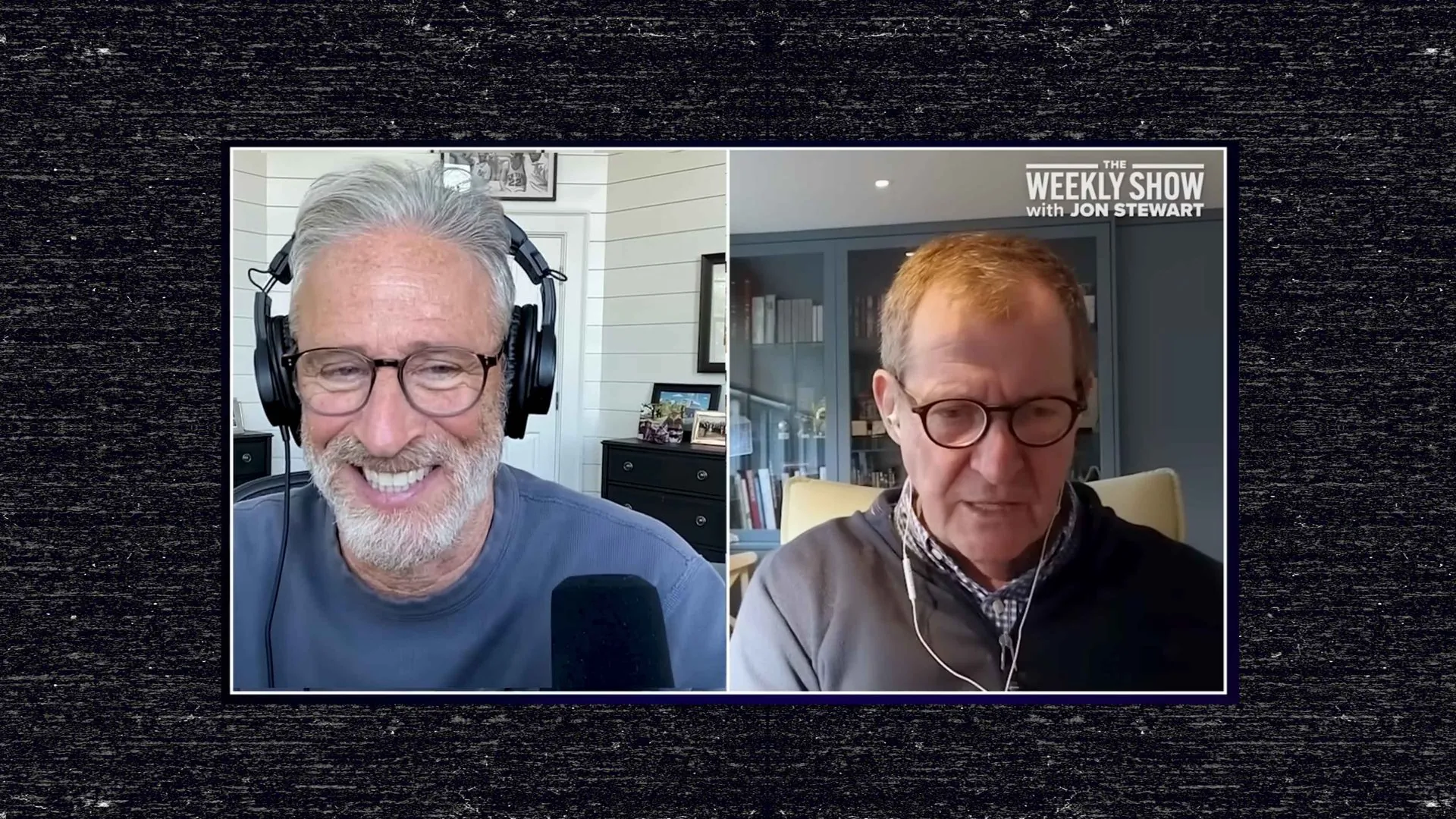
Alastair Campbell’s diary: How Jon Stewart told me the brutal truth about Trump and Hegseth
A tour of top podcasts featured savagings of Brexit – and the man baby in the White House... Continue
1 April 2026
Posted by Alastair Campbell
Nineteen Eighty-Four: Big Brother, Surveillance, and Fear (The Book Club)
Why is 1984 as relevant today as when it was published? Who is Big Brother, and why is he so powerful? What was George Orwell's intention when creating the world of 1984, and what does it tell us abou... Continue30 March 2026
Posted by Alastair Campbell
182. Culture Wars, Identity, and What Needs To Change In Congress (Sarah McBride)
How are rights for trans people in the US improving or worsening under the Republican administration? What fundamentally needs to change in Congress to improve the state of politics? Are the Democrats... Continue30 March 2026
Posted by Alastair Campbell
It is interesting to compare the Northern Ireland and Cyprus peace processes, why one was able to lead to agreement while the other has lingered. The key reason why Northern Ireland ‘succeeded’ and Cyprus ‘failed’ is the following, in my view:
In 1990, Peter Brooke, Northern Ireland secretary in Margaret Thatcher’s government, stated that Britain had ‘no selfish strategic or economic interest’ in Northern Ireland. It was therefore thrown onto the nationalist and loyalist communities to work out their differences and come to a power-sharing deal.
In Cyprus, these power-sharing arrangements between Greek and Turkish Cypriots have largely been agreed; but the sticking point to a comprehensive deal has been Turkey’s demands to retain a presence and influence on the island, indeed extend its influence from the occupied areas of the island to all areas of the island.
Thus, in 2008, former Turkish foreign minister Ahmet Davutoglu was clear that Turkey sees Cyprus as part of its span of control: ‘Even if there was not one Muslim Turk there, Turkey had to maintain a Cyprus problem. No country can stay indifferent towards such an island, located in the heart of its very own vital space.’