

Europe needs to get real on defence; Britain needs to get real on Europe
13 February 2025


Post
21 May 2011

3 minute(s) read
Recent Posts
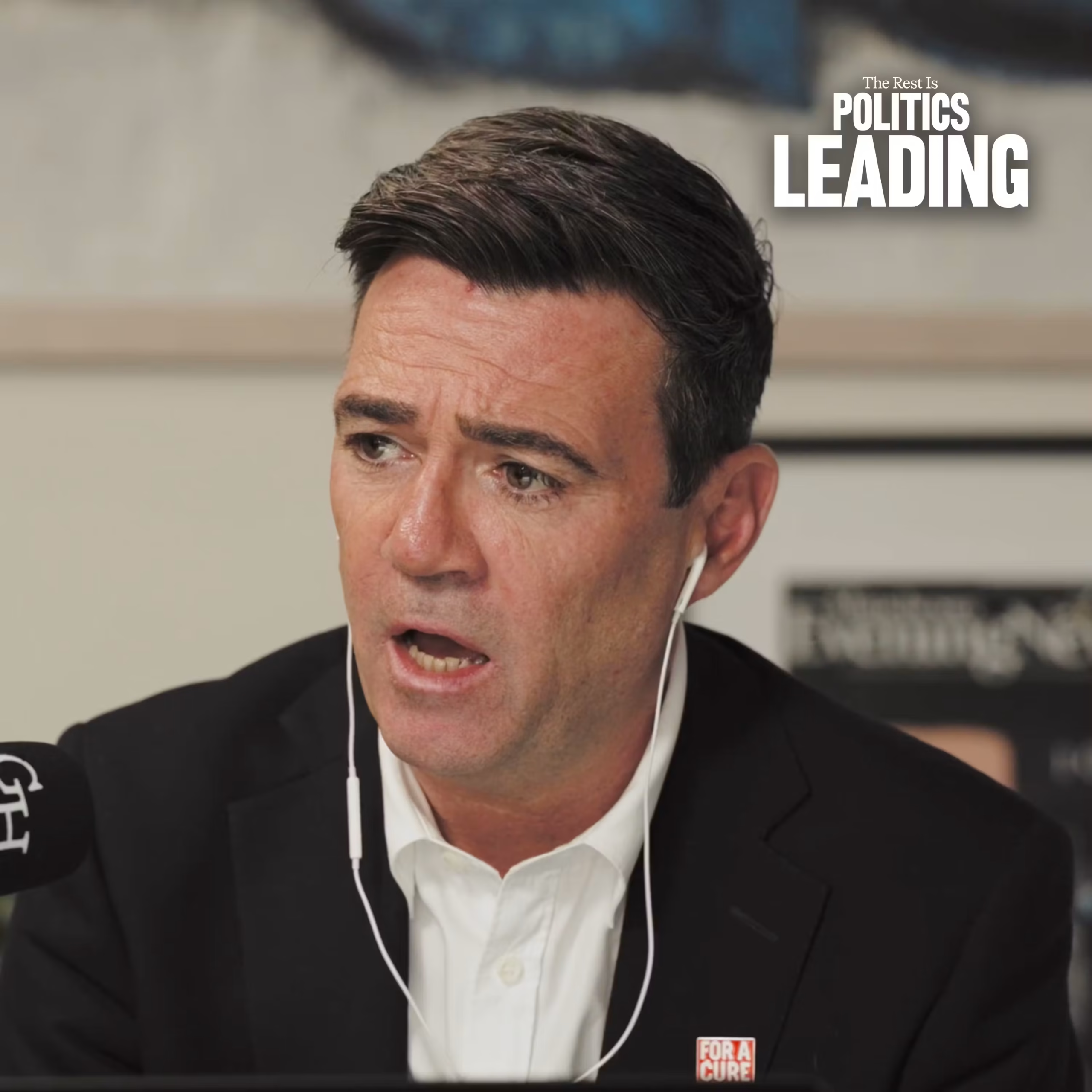
210. Andy Burnham: My Relationship With Starmer, Brexit Lies and Emotion in Politics
How will he change Britain’s relationship with the EU? Why has he agreed to publish details of meetings following the Manchester City scandal? With the Trump administration planning to livestream a ... Continue12 October 2026
Posted by Alastair Campbell

Oct
22
2026
Alastair Campbell and Mishal Husain live at Cadogan Hall
He’s invented a word. He says it’s the word the world needs now. She’s going to make him explain why. Alastair joins acclaimed broadcaster Mishal Husain on stage to discuss his new book, Per... ContinuePosted by Alastair Campbell

578. Alastair and Michael Gove Disagree Agreeably on Brexit and Israel
Will there be another EU referendum, despite Andy Burnham promising not to re-run old Brexit arguments? Will Michael Gove ever criticise Israel's actions in Palestine, and if not, why not? What do the... Continue8 October 2026
Posted by Alastair Campbell
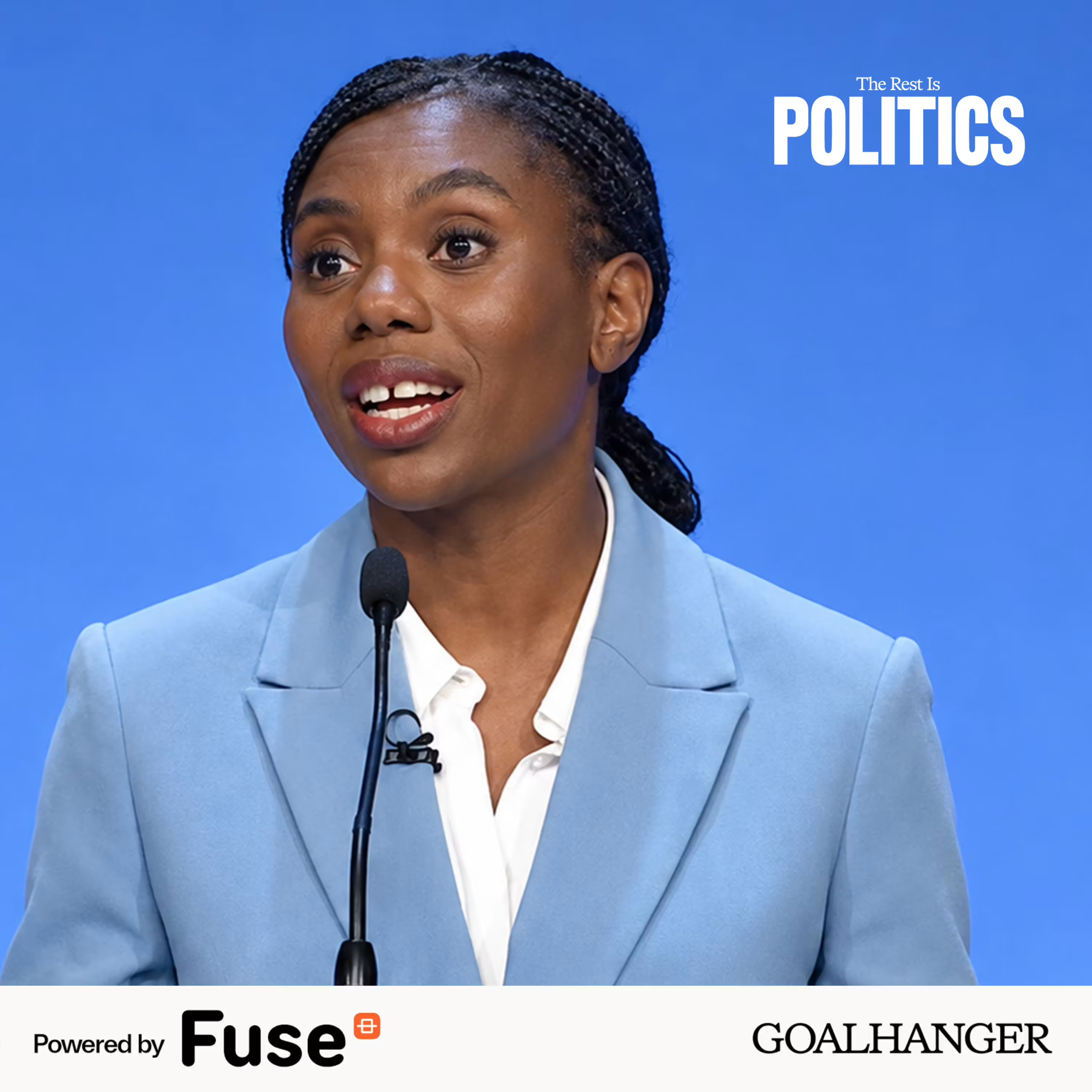
577. Is Badenoch Finally Stopping Farage and Why Are French Schools on Fire?
With Reform bogged down in scandal, and Kemi Badenoch setting out her political vision at Conservative Party conference, have the Tories finally wrestled momentum on the right of British politics away... Continue7 October 2026
Posted by Alastair Campbell


6 October 2026
Posted by Alastair Campbell
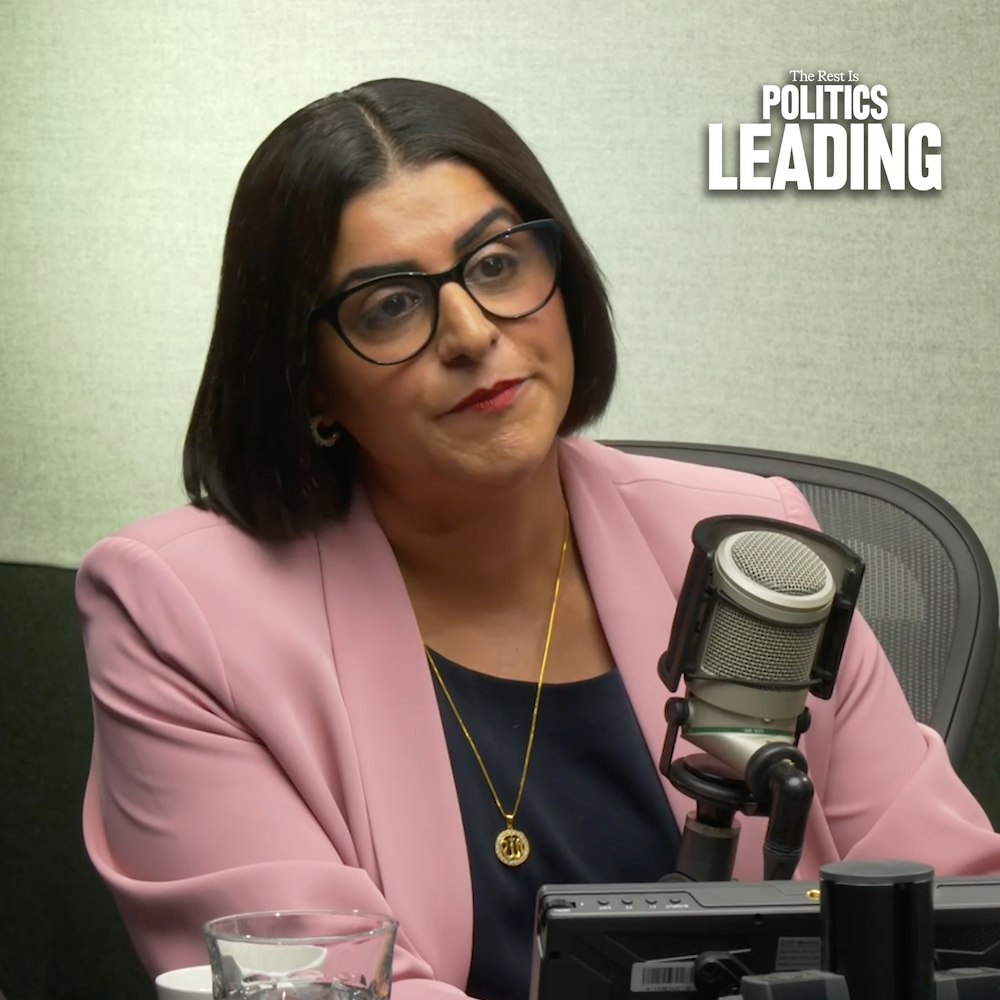
209. Shabana Mahmood: Palestine Action, Faith and What I Told Starmer
Is the government's ban on Palestine Action lawful, or overreaching? Why can't Britain just send small boats straight back to France? Can faith and public duty coexist in modern British politics? Ro... Continue5 October 2026
Posted by Alastair Campbell

576. How Xi is Outplaying Trump and Tensions in Northern Ireland
As Trump becomes the first American president to personally welcome a visiting head of state off a plane since JFK greeted Harold Macmillan in 1962, did his summit with President Xi signal improving U... Continue1 October 2026
Posted by Alastair Campbell
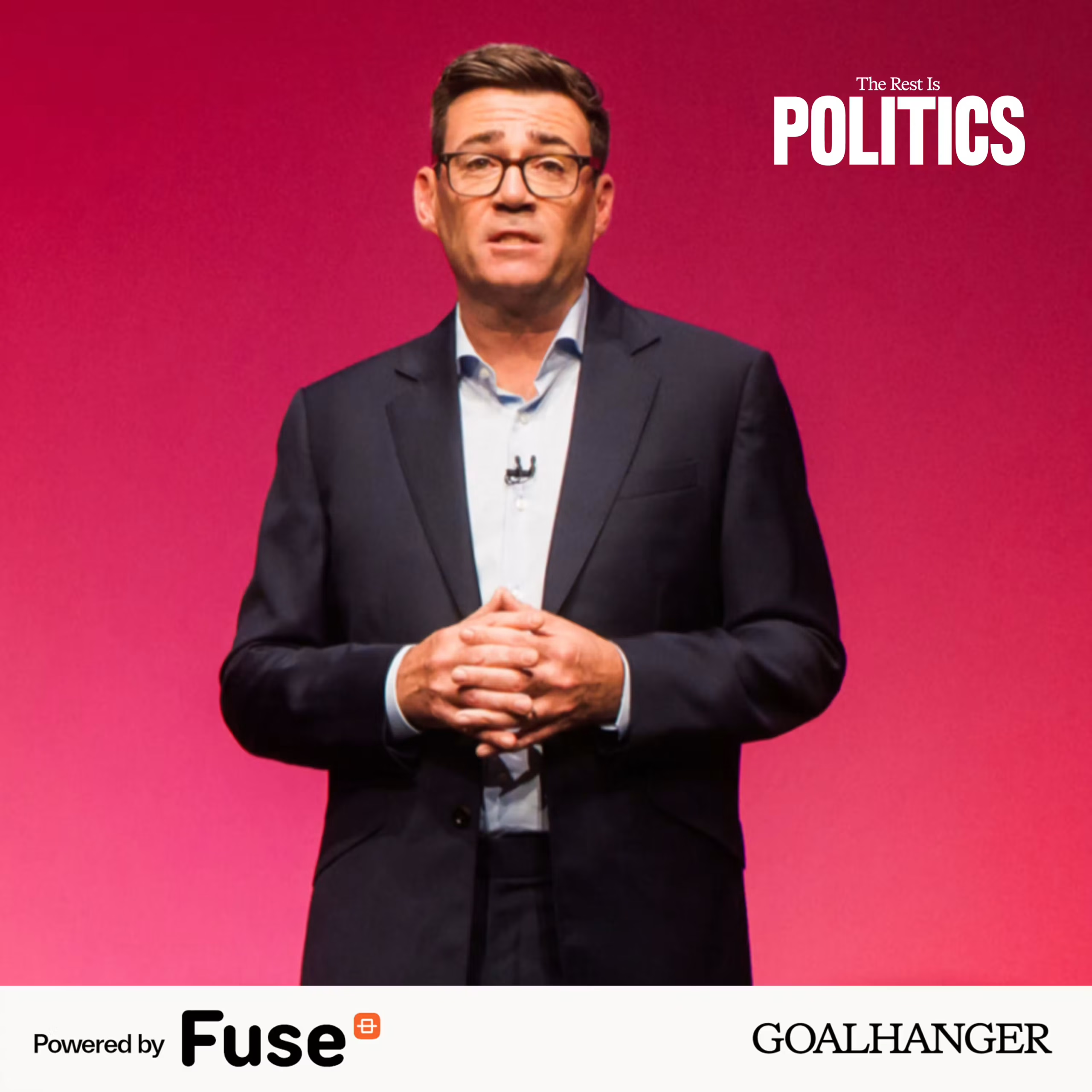
575. Alastair Reacts to Burnham’s Speech and Rory’s Viral Stare
Will scrapping the triple lock be electorally perilous for Burnham, or can his vision of a national care service convince the public and his party that it’s time for pension reform? Did being Mayor ... Continue29 September 2026
Posted by Alastair Campbell



Agree. All discussion is about how bad things are at present and how we dig ourselves out of the hole we’re in. The coalition has no incentive to run the discussion any other way.
Hopefully there is going to be an upswing and Labour has to make that it’s territory.
Atb
John
I will start with Vince Cable´s interesting interview with the Guardian.
The business secretary says that the political class has not yet prepared the public for the scale of problems facing the UK economy. British economy declined 10% below trend. And the balance of the world economy is changing.
Britain´s economic model has failed. Big structural changes are needed.
Coalition´s credibility depends on whether it is successful in its efforts to eradicate the structural deficit.
Mr Cable is not optimistic about growth in the short term. And over-confidence can be a problem – government cannot control everything in the economy.
It must be news to Mr Osborne that “there is a lot of flexibility built into current policy”. Mr Cable even mentions basic Keynesian stabilisers and says that if the economy slows down, deficit temporarily has to rise!
We are really entering a “new phase” in coalition politics.
Ed Miliband also writes in the Guardian.
He wants to set out a clear national mission. Providing louder opposition is not enough. Superficial repositioning is inadequate.
Clear and positive vision is needed.
We need a different kind of economy which is less reliant on financial services. We need better capitalism. We need to look beyond the bottom line.
Labour´s future lies in the synthesis of New Labour and Blue Labour.
Maurice Glasman puts faith in working-class values. The Labour tradition is richer than recent economic utilitarianism and political liberalism.
Blue Labour is trying to renew the party as a powerful force for good. Politics of common good are needed. Mutuality and solidarity are needed.
Ethical vision of a humane society on which Labour was founded in 1900 is still relevant today.
Finance capital pursues the maximum returns on investment. Human beings are turned into commodities. Labour must be against this.
But Blue Labour has no nostalgia about old Labour and no illusions about the new. Blair and Brown were naive about finance capital and the City.
A conception of globalisation was understood entirely on terms set by finance capital.
The starting point for Blue Labour is that the banking crisis of 2008 marked the end of New Labour´s economic model. This opens up the possibility for renewal.
We cannot build economy on consumer spending, a housing bubble and an overweight banking system.
Ed Miliband said in his Fabian speech in January that he is opposed to the domination of capital.
Blue is small-c conservatism. Labour needs to value tradition more. Labour must stand up to the power of market forces.
Pay gap is widening to Victorian levels. Top earners´ slice of national income will rise from current 5% to 14% by 2030.
The time for the Robin Hood tax has arrived.
A demand for responsibility has emerged as the dominant theme from submissions to Labour´s policy review.
Voters are frightened by the crisis in the market economy, but have little faith in left´s ability. This must change!
Labour must focus on establishing political credibility.
But talk of generating “a vision” at the present time ignores the fact that the narrow escape from fiscal meltdown and the cuts will dominate voters’ consciousness for years. The only viable “vision” is how to minimise their impact..Not very inspiring or uplifting perhaps, but at least honest. The Big Society or health reform (both of which will cost and be funded how exactly?) or “optimism” (based on??) are just hypocritical distractions from the central, relentless drive to extricate ourselves from the mire.Then maybe you can start talking the politics of vision.
Hi Alistair. I agree that Labour needs to show the British public that it has a plan for the future that will address and actually tackle many of the issues that beset this country, namely the economic struggle, but his position on the ‘left’ (if that even exists in British politics) is not a viable option for the British people. Even with a clearer sense of direction, Ed Miliband’s policies will not ‘win back’ many parts of the electorate, especially middle England. The reason, as of course you know, that Tony Blair was so successful was because he appealed to a far wider cross-section of the public than Ed Miliband will ever do. I believe quite firmly that Labour needs to follow the guidance laid down by Blair in his book and in various other interviews: it needs to retain New Labour. It was New Labour that won three general elections, not the traditional Labour that sat by and watched for eighteen years as Thatcherism dominated our political lives. A clear vision for Britain’s future? Yes. Ed Miliband to deliver it? No.
My immediate thought on Ed Millibands piece was “well, get on with it!” not inspiring and mirrored to rhetoric – at the time welcome – Nick Clegg treated us to in the pre election debates. The media are not scrutinising Coalition activity. The pulic, through petition, letter writing, protests and even voting (?) are not being heard. What to do?
I hope Ed M talks long and hard with Peter Mandelson about manufacturing and public intervention. Both Cable & Osborne have shown that they have a completely empty box on how to rebalance the economy. The news yesterday from Tata Steel confounds government policy – they do not expect construction to return to 2007 levels for five years and thus will reduce jobs by 1500 (around 25% of the jobs they have in that sector). Growth and intervention to support manufacturing growth must be central to Labour’s strategy. The key must be to construct a narrative that the South of Britain can tune into. 1500 lost jobs in Lincolnshire and Teesside means lost builders jobs in Surbiton and Hampshire.
Excellent post Olli I. Very well observed.
Most people simply don’t want “old Labour” I know I certainly don’t.
Ed M got off to a very bad start last year, by trying to distance himself from Tony Blair and New Labour. I was incensed by his remarks and so were many other people.
I simply want a Labour government that doesn’t block the aspirations of potential wealth and job creators, particulary in industry. But also a compassionate Labour government that doesn’t forget the needs of the most vulnerable members of society. Surely that’s not too much to ask for or expect?
Having found Miliband’s Guardian piece mostly vacuous waffle, I read the full speech to Progress. I was especially interested in his concept of a “better capitalism”. What would that look like? How could it be achieved?
All I found was dozens of verbless sentences (of which previous Labour leader does that remind me?) and the aspiration for a capitalism “that is true to our values as a country.”
And which values would those be, for God’s sake? Right wing Tory values? Left wing Labour values? Or our pleasingly vague friends: tolerance, fairness, compassion? They are not always evident in the bar of the Dog and Duck or the pages of the Mail and Sun and are hardly relevant to any profit-driven enterprise.
And how does a Government imbue capitalism with the values of one country anyway or build a ‘better capitalism’ when we have a global capitalist economy?
I’m sorry, but this speech was just meaningless tosh, reminiscent of Blair at his worst.
Fully agree.
‘They are running a programme founded essentially on an exaggeratedly negative view of what went before, a point Polly Toynbee makes in the column alongside Ed’s’
The Tories would find it harder to do this if people like Toynbee and Miliband didn’t spend so much time themselves dissing the Labour record. A very dangerous thing to do, especially when you have no credible narrative about the future to set against the Tories’ dismantling of the state, ‘in the national interest’, of course.