Q and A on TB’s book for La Repubblica

  • Post

  • 2 September 2010

  • Posted by Alastair Campbell

  • 4

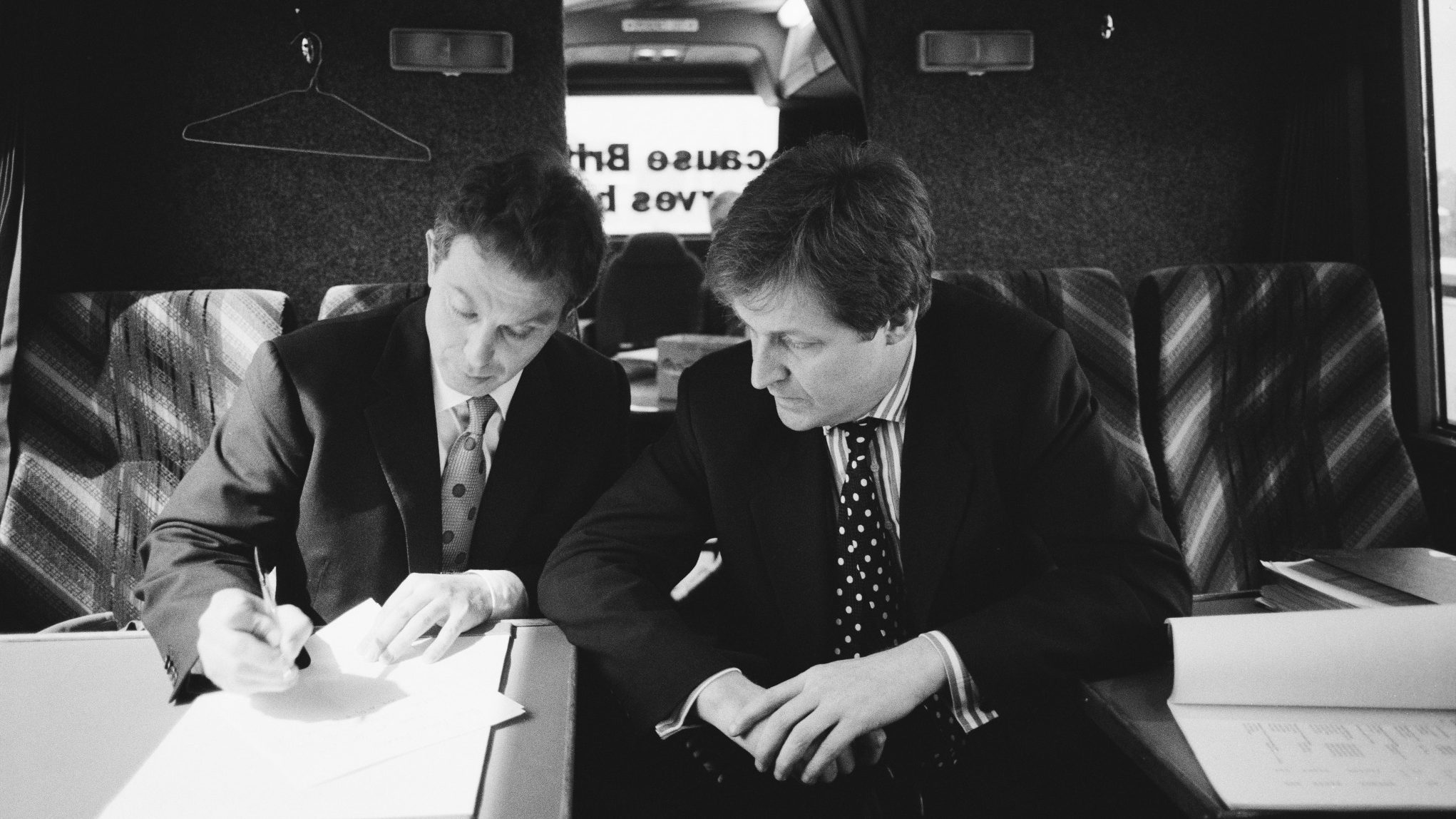
Nothing much to add to the voluminous coverage of TB's book. Just did a bit with Richard Bacon on Five Live after TB's interview. Interesting (human being) response from comedian Dom Joly. Just said he liked Tony and thought he was an amazing politician. That response is more common than you might think from the media, and I speak as someone who gets asked about TB by members of the public pretty much every day. Just did a clip for BBC News on the William Hague situation, after the Beeb read my blog of earlier today. Meanwhile below is the English version of an interview I did for today's La Repubblica newspaper on TB's book. 1)      From what has been reported so far, what do you think of the book? I think a lot of the British coverage in the build-up showed the real hatred that many in our media have for Tony, the right because he kept winning, the left because he was not left wing enough for them, and many because of Iraq. But I sense the response shifting now that the book is out there, and they can see its depth and its richness, and the candour within it. I read it some months ago, and was impressed by its freshness and that sense of openness about himself. As Andrew Marr of the BBC said this morning, it is a very self-revelatory book. It is full of fascinating insights. The interest is enormous of course and I think this will all confirm him as the dominant political figure of his generation. 2)     How do you think it will influence the race for the Labour leadership? I’m not sure that it will. The timing isn’t great as ballot papers for the elections are going out right now, and our media debate is totally dominated by TB and the book, rather than the issues for the election per se. David Miliband’s opponents will try to use it to make it difficult for him, but I think most people are able to separate out the issue of a memoir by a former leader and the debate going on about a future leader. Party members will make their own minds on all sorts of things and I don’t necessarily think the book will be a significant one. 3) Do you think the judgment on Brown and the Labour defeat in May is right? It is not possible for anyone to know for sure all the reasons that led millions of people to vote in a certain way. I think the combination of our longevity in office, the sense that the Tories had a younger and fresher leader than his predecessors, the expenses scandal and above all worries about the economy all provided a very difficult backdrop for Gordon. It is also the case that when he took over people wanted a sense of change and the change that many detected was a retreat in some areas from New Labour. But though the headlines are focusing on some of the negative comments TB made he also points out how brilliant GB could be and how important he was to the successes we had. 4) Were you aware that Blair found "support" in drinking during the most difficult time in Downing street? That was a new one on me. I don’t think I have ever seen Tony drunk and I can only once remember him saying he had a bit of a hangover. I had a serious drink problem in the 80s and was drinking a lot more than Tony seems to have been doing. So I don’t think he had a problem, but he clearly felt he was using it as a crutch from time to time, particularly later on towards the end of his time in office. 5) He writes that you were like "an alter ego" for him: is this the way you felt? And how do you consider his overall view of yourself? I think as with most people, he is fair. He is full of praise for the support I gave him, and goes so far as to call me a genius, which may be a bit over the top. As for the alter ego it is true that I at times felt that I thought as he did because I was having to communicate as he would in dealing with the press. But he is also of the view that towards the end of my time in Downing Street, I was getting very angry and in a bad mindset for the job. I was in charge of his dealings with the media and my own dealings with them had become really bad. 6) Have you spoken to him about the book? Many times. He sent me a couple of drafts at various points but anyone who reads it will see it is totally his book, in his style. 7) Do you think "The Ghost" (book and movie) was just fiction or had some similarieties with the real Blair? I’m afraid I haven’t read the book or seen the film. 8) How do you think that history will judge him? More kindly than most of the commentary in the UK. He was a winner, serving longer in office than any Labour leader by far ... he presided over a decade of growth and prosperity, turned round investment in public services, got crime down, delivered on a major programme of devolution, the minimum wage ... I could go on and on ... and whilst many people like to pretend Iraq is his only legacy, don’t forget Kosovo, Sierra Leone, the leadership he showed after 9/11, Northern Ireland. He was without doubt one of the major reforming Prime Ministers in our history. 9) And personally what would you like him to be doing? Isnt it a waste, for Britain and the world, no to use his talent in a more effective way? Europe’s leaders could have done something about that when deciding the new President! But as you can see from the fact he was on Middle East work last night, he is still engaged in public service but doing it in a very different way.

4 responses to “Q and A on TB’s book for La Repubblica”

  1. History will judge him as a traitor, as liberty’s executioner, a man for whom the relentless pursuit of power was not a means to an end, but the end in itself.

    Don’t buy this shameless auto-hagiography. Donate to the Poppy Appeal or Help for Heroes.

  2. I was very impressed by Tony Blair’s interview with Andrew Marr and I am looking forward to reading his autobiography. Despite what I with the benefit of hindsight regard as a great misjudgement in terms of the Iraq invasion I have always believed Tony Blair to be a politican of the utmost integrity who served Britain with tremendous vigour and far sighted vision during his time in office.

  3. New Labour´s economic model of free markets plus state action is broken. New Labour works only when there is strong economic growth.
    Labour did not lose because it abandoned New Labour. The Conservatives already enjoyed a substantial lead in the polls when Tony Blair left in 2007.
    New Labour believed that private sector would enrich the whole population. But as economist Ha-Joon Chang has shown, maximising market freedom is not the best way to generate wealth.
    Acceptance of inequality was based on this wrong assumption. New Labour regulated the City little to maximize wealth for redistribution. But this resulted in financial crisis, recession and slow growth.
    New Labour believed that middle-class voters were the key to power. It took the working people for granted for too long. Between 1997 and 2010 Labour lost 5 million votes – 4 million under Tony Blair. Only 1 million of these votes went to the Tories.
    So Labour did not drift too left. And people who compare “Red” Ed Miliband with Michael Foot should know better. Ed Miliband knows that Labour must attract a wide range of people.
    Ed Miliband can build a progressive alternative based on modern social democracy to reclaim the centre left. Ed can reconnect with Labour´s natural supporters without losing middle-class voters. This is not a zero-sum game.
    The cross-class alliance is needed so that Labour could win again.
    Anyway, class has largely lost its signifigance as determinant of votes. Values mean nowadays more than class or ideology. Fairness is important to Labour voters. Labour must also rebuild trust.
    Labour lost because it lost the support among C2DEs without gaining enough ABC1s.
    Increased gap between the rich and poor caused by neoliberalism did not help. It seems that Middle England had stronger sense of social justice than Labour.

Leave a Reply

Your email address will not be published. Required fields are marked *

209. Shabana Mahmood: Palestine Action, Faith and What I Told Starmer

Is the government's ban on Palestine Action lawful, or overreaching? Why can't Britain just send small boats straight back to France? Can faith and public duty coexist in modern British politics? Ro... Continue

5 October 2026

576. How Xi is Outplaying Trump and Tensions in Northern Ireland

As Trump becomes the first American president to personally welcome a visiting head of state off a plane since JFK greeted Harold Macmillan in 1962, did his summit with President Xi signal improving U... Continue

1 October 2026

575. Alastair Reacts to Burnham’s Speech and Rory’s Viral Stare

Will scrapping the triple lock be electorally perilous for Burnham, or can his vision of a national care service convince the public and his party that it’s time for pension reform? Did being Mayor ... Continue

29 September 2026

500 campbell farage

Alastair Campbell’s diary: Why is Farage so keen to protect Russia’s right to lie and cheat?

Reform's leader is protesting too much as he wails about free speech in the face of Putin’s disinformation... Continue

29 September 2026

208. Mustafa Suleyman: Is AI Actually Conscious?

Can Artificial Intelligence stay subordinate? Is Anthropic’s 100-Page constitution creating dangerous AI autonomy? Should AI models be granted legal personhood, rights, or financial compensation? C... Continue

28 September 2026

Why Nuclear War Is More Likely Than You Think (with Carlo Rovelli)

Why have we stopped talking about the risk of nuclear war when the risk is greater than ever? What is a ‘nuclear winter’ and why are nuclear exchanges such extreme risks for the future of humanity... Continue

24 September 2026

574. Germany’s Political Disaster and Can the Lib Dems Fight Back?

As the far-right Alternative for Germany wins another regional election, wiping out the ruling Christian Democratic Union in former Chancellor Angela Merkel's own backyard, will Friedrich Merz face th... Continue

24 September 2026

499 campbell rose

Alastair Campbell’s diary: I met a hero of Gaza in a cinema queue

A new documentary lets Victoria Rose and other doctors describe the horrors they have witnessed... Continue

23 September 2026