

Europe needs to get real on defence; Britain needs to get real on Europe
13 February 2025


Post
25 November 2009

4 minute(s) read
Recent Posts
211. Trump’s Niece on Why He’s On Putin’s Side
How did Donald Trump’s childhood shape the president we see today? Why was Mary Trump cut out of her grandfather’s billion-dollar will? Why does he want to see Europe fail? Alastair and Rory are j... Continue19 October 2026
Posted by Alastair Campbell
Addiction, Breakdown and Finding Persevilience: Rory Interviews Alastair
How has Alastair managed to come back from some of the darkest places in his life, overcoming a breakdown while in the public eye? Is his obsession with work unhealthy, or necessary to achieving great... Continue16 October 2026
Posted by Alastair Campbell
580. How to Solve Britain’s Youth Unemployment Crisis
In Britain, we spend £25 on benefits for every £1 we spend helping young people find work. So why have successive governments failed to fix this – and what does Alan Milburn’s review, due this a... Continue15 October 2026
Posted by Alastair Campbell
Alastair Campbell’s diary: My truly deranged encounter with Trump apologist Kellyanne Conway
The godmother of ‘alternative facts’ assured me the president loved Zelensky – just as he was stabbing him in the back with Putin... Continue
14 October 2026
Posted by Alastair Campbell

579. Trump’s Public Execution Order and Burnham’s Brexit Intervention
How does Marco Rubio’s Parthenon speech fit the Trump administration’s ideas on European “civilisational erasure” – and how does it depart from traditional Republican rhetoric? With Pete Heg... Continue14 October 2026
Posted by Alastair Campbell
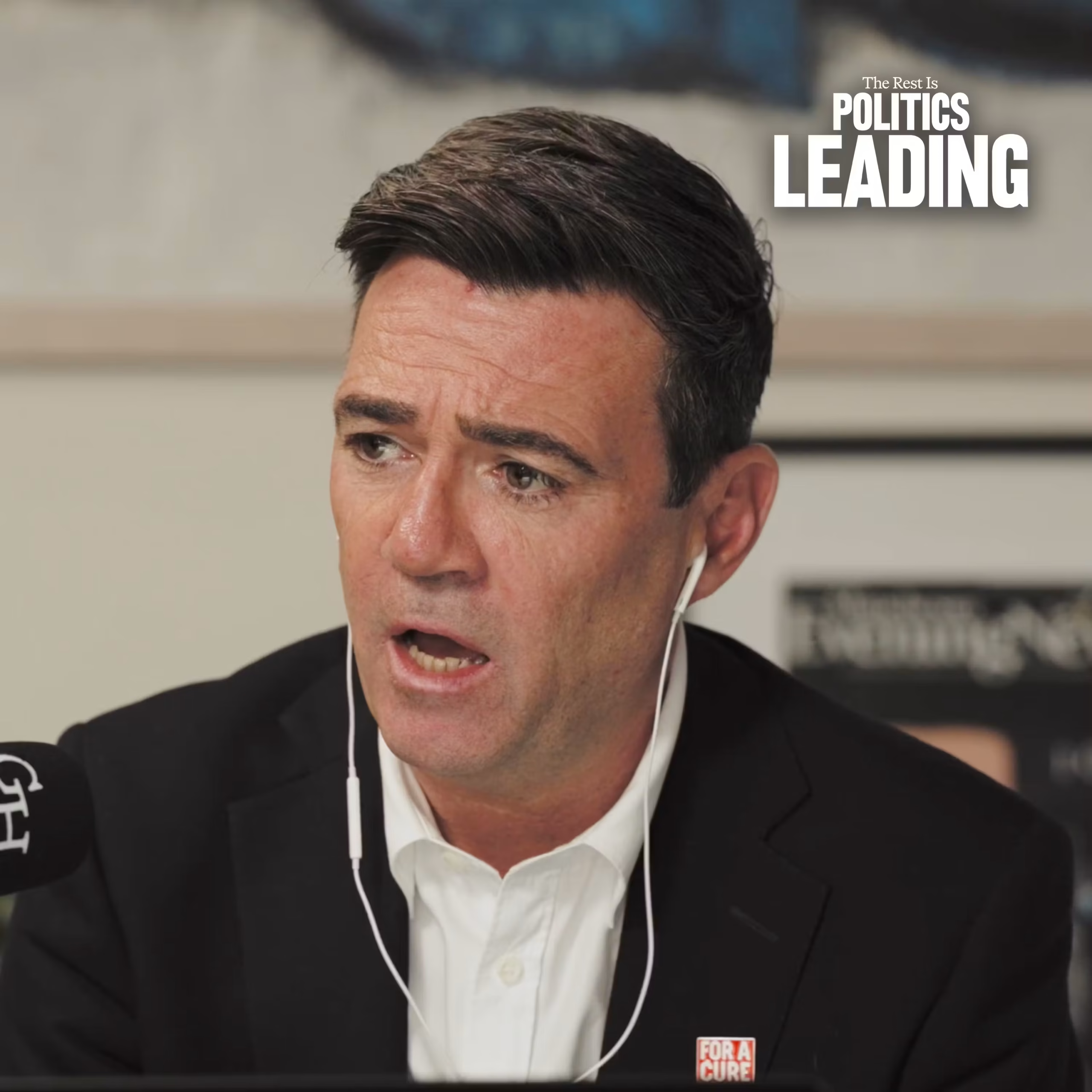
210. Andy Burnham: My Relationship With Starmer, Brexit Lies and Emotion in Politics
How will he change Britain’s relationship with the EU? Why has he agreed to publish details of meetings following the Manchester City scandal? With the Trump administration planning to livestream a ... Continue12 October 2026
Posted by Alastair Campbell
Oct
22
2026
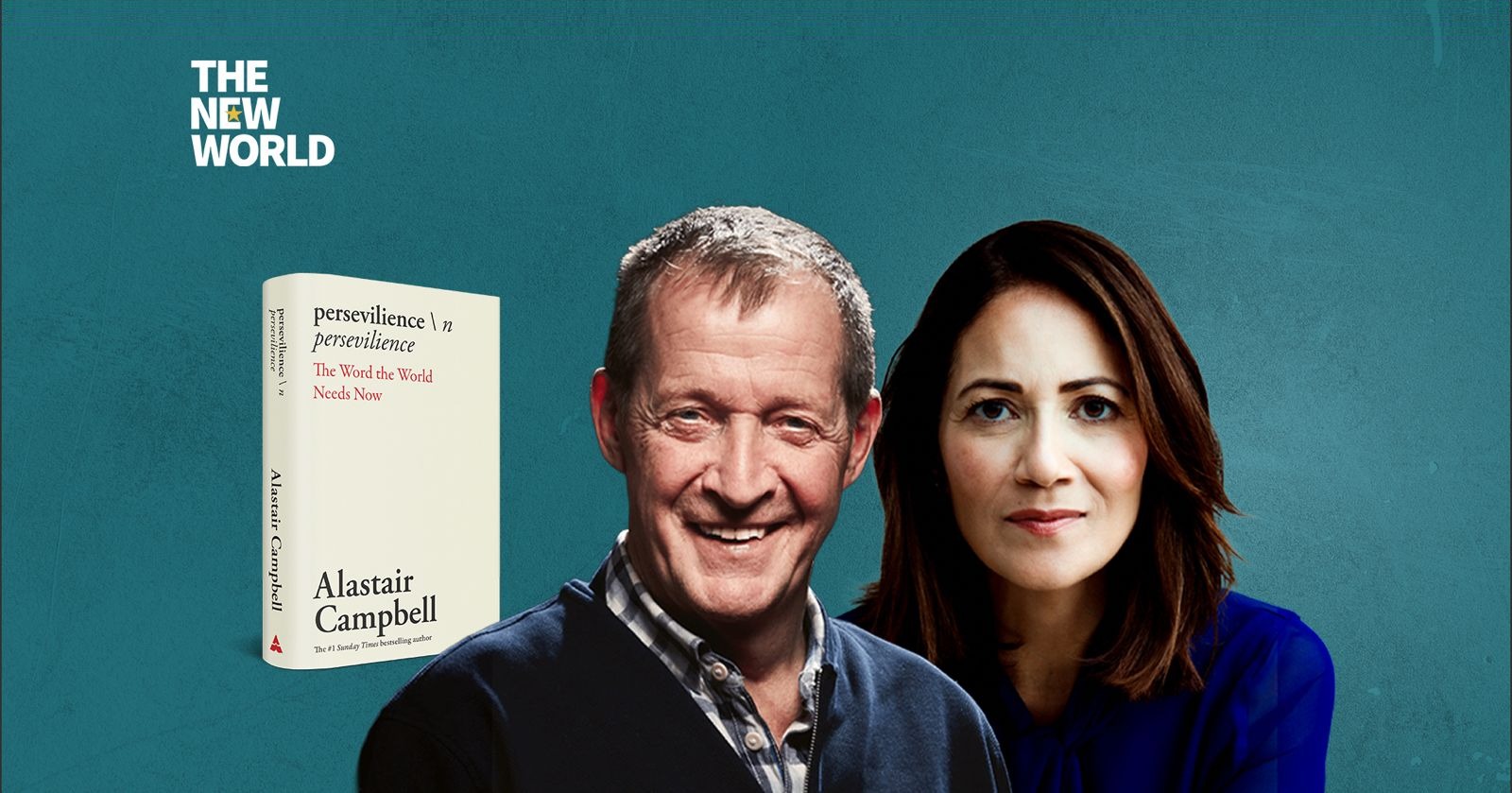
Alastair Campbell and Mishal Husain live at Cadogan Hall
He’s invented a word. He says it’s the word the world needs now. She’s going to make him explain why. Alastair joins acclaimed broadcaster Mishal Husain on stage to discuss his new book, Per... ContinuePosted by Alastair Campbell

578. Alastair and Michael Gove Disagree Agreeably on Brexit and Israel
Will there be another EU referendum, despite Andy Burnham promising not to re-run old Brexit arguments? Will Michael Gove ever criticise Israel's actions in Palestine, and if not, why not? What do the... Continue8 October 2026
Posted by Alastair Campbell



The documentary is sadly too late for Robert Enke, but if his death can allow sport and society to become more open to mental health issues such as this, it can only be a good thing.
You funny. I know your “stay with me, stay with me, this is not another Burnley blog, I promise” isn’t specifically targeted at me but I’ll still want to mention that I loved “Born to Run” and almost considered putting “It’s Not About the Bike” on my Xmas list. I watched the first five minutes of “The Damned United” but really didn’t have any idea what was going on so I stopped the DVD.
I thought exercise was an antidote to depression, I thought it raises one’s endorphins or serotonin or sommit. I guess sports as a career is different. Wish I could peek at doc.
Congratulations again on the award.
It’s 5:44 here and I am off to the gym…. ugh…
Marcus Trescothick’s autobiography, and your novel, are for me the best non fiction and fiction of recent times on this theme. I am not a sports fan but I felt his honesty was so powerful and I too will watch tonight.
I have a copy of your documentary on dvd and have given it to several mental health service users I know, for the exact reason you set out, that it can help when ill to hear stories of others who have been in similar positions and got through. I think your film was also important for showing the broader impact on family and colleagues which we do not consider enough. I work as a volunteer for a mental health centre and rightly the focus is on the mentally ill person, but it can be so hard for families and friends
Talking about mental illness can only be a good thing as the topic is one people shy away from and at the root of this I think, is fear. My breakdown in l993 changed my life and when I wrote an article and then a book (Don’t Mind Me) that was not the end of the story. I had then to allow some of those closest to me, to react. I applaud everyone who is open about their mental illness and I too believe it’s not one in four, it’s more like every one of us is affected in some way. The more we talk openly about mental illness and can support others, the more comfortable it will become to talk about it and the fear and stigma should disappear Mental illness for me was surrounded by shame and a massive drop in confidence; sufferers need reassuring it’s not their fault it’s often bad luck and with support and encouragement they will come through it. The Time To Change campaign can only go from strength to strength.
Every single person in the public eye who opens up about their mental health experience contributes to a wider understanding and awareness. Forty years ago, no one talked openly about having cancer, and thus people died without a better understanding of the misery and suffering which could be caused by – for example – a packet of cigarettes a day.
Openness is a massive contribution to improved health and recovery, and I too am very glad that the BBC and Inside Sport are focusing on this important subject, and allowing many sports fans and followers to feel that depression is an illness, not a weakness.
Tonight’s program on depression in sport will really help get rid of that awful stigma about mental health I think.
I wish I was strong enough to “come out” to my work colleagues but I think I am just now ready yet!
Handing out Winner Awards to folks who have proven they aren’t ” … all there … ” – whatever next, then?
Let’s all pray the ‘Powers that Be’ don’t “normalise” CrazyPeople abit TOO far, because we all – to quote the words of the Billy Joel song lyrics – ” … love you just the way you are …”
Besides, wiser to remember you are more like One In A Million – a more ennobling and empowering Global Metaphor than a mere “one in four” – just another dumb (and typically inaccurate) Mental Healthcare statistic. Which dubious, innumerate NHS nelly’s responsible for that headcount, exactly?
Still, comforting to learn that even scientific academics in their ivory towers struggle to grapple with the mysterious world of numbers
Handling figures that clumsily, it follows every cricket team Banger Tresco (Marcus Trescothick) has ever played in – at whatever level, through school, then club to county, then England Test – there’s been THREE players with mental health ‘issues’ included in the lineup
Naturally, I counted in the 12th Man substitute, as at club level, often that sub turns out to be me. (Because I excel at carrying a tray of soft drinks, without spilling a drop)
I quench thirsts, whereas Marcus’ opening up and going public, has the potential to change lives, inside AND outside sport
Inside sport? Guess you recall the depression that led Yorkshire CCC wicket-keeper, aged 46, the likeable David Bairstow, to hang himself at his home in Marton-cum-Grafton, Yorkshire, on 5th January 1998?
I still do. And I guarantee the loved ones he left behind, now living in Dunnington, including his wife Janet, and children Andy, Jonathon and Becky, they do
Worth reflecting on any such parallels, during your own rougher moments, when depression climbs down inside you and you feel defenceless to prevent its power temporarily taking you over
Trevor Malcolm
Portsmouth, Hampshire
////////////////////////////////////////////////////
////////////////////