
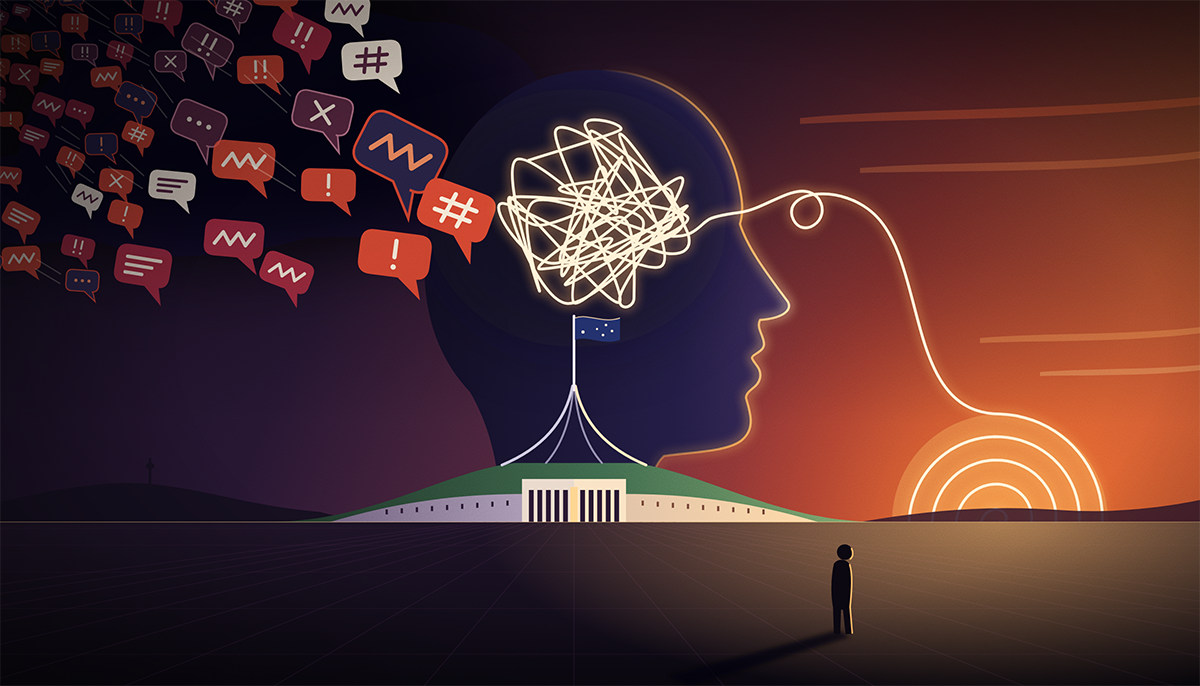
Politicians and mental health … not a happy scene
23 November 2026


Post
18 November 2009

4 minute(s) read
Recent Posts
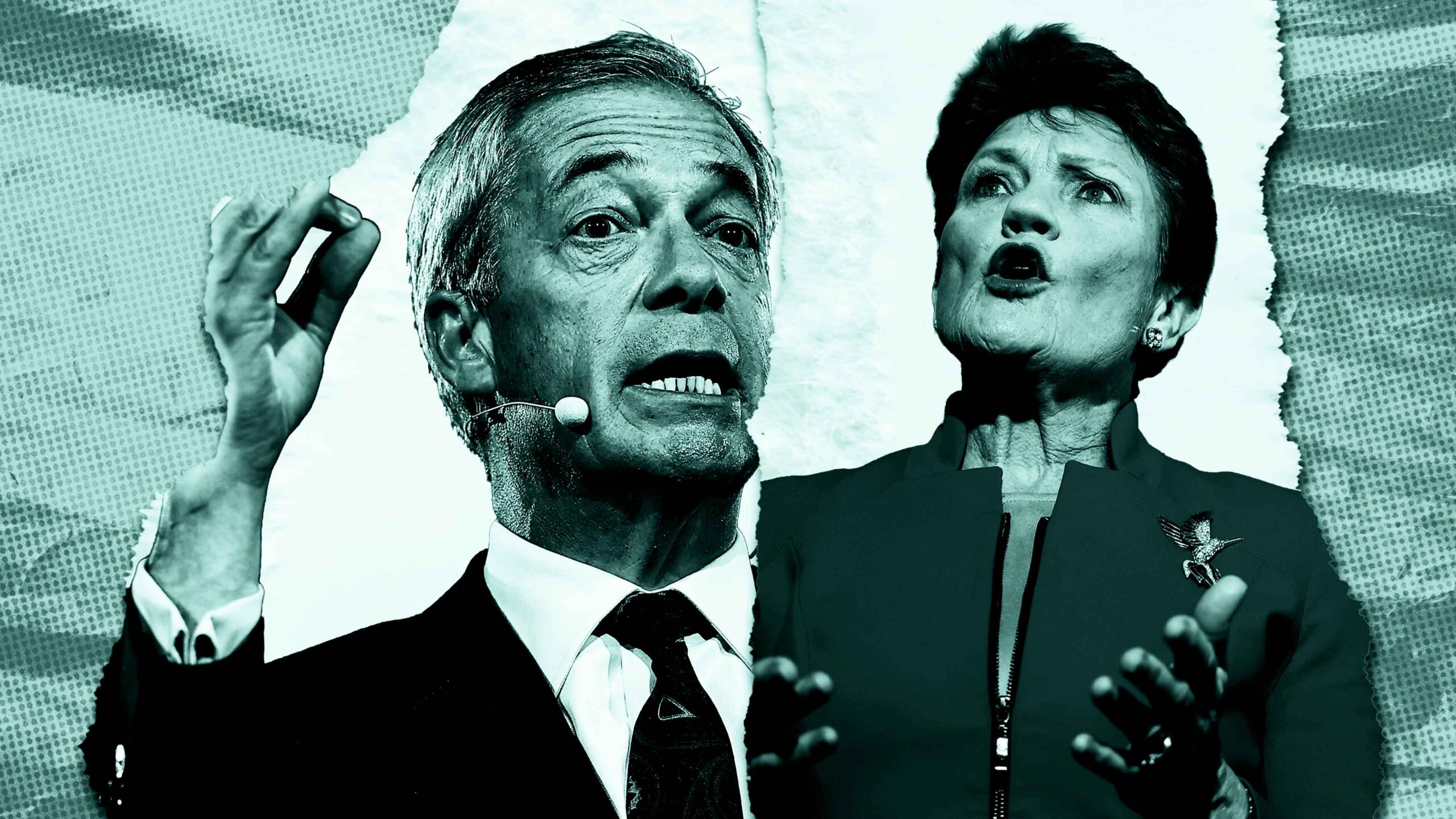
Alastair Campbell’s diary: The Farage virus has spread to Australia – here’s how to beat it
Like Reform’s leader, Pauline Hanson knows how to stoke up public anger. But as with Farage, money, incompetence, nastiness and Trump are her big weaknesses... Continue
25 November 2026
Posted by Alastair Campbell
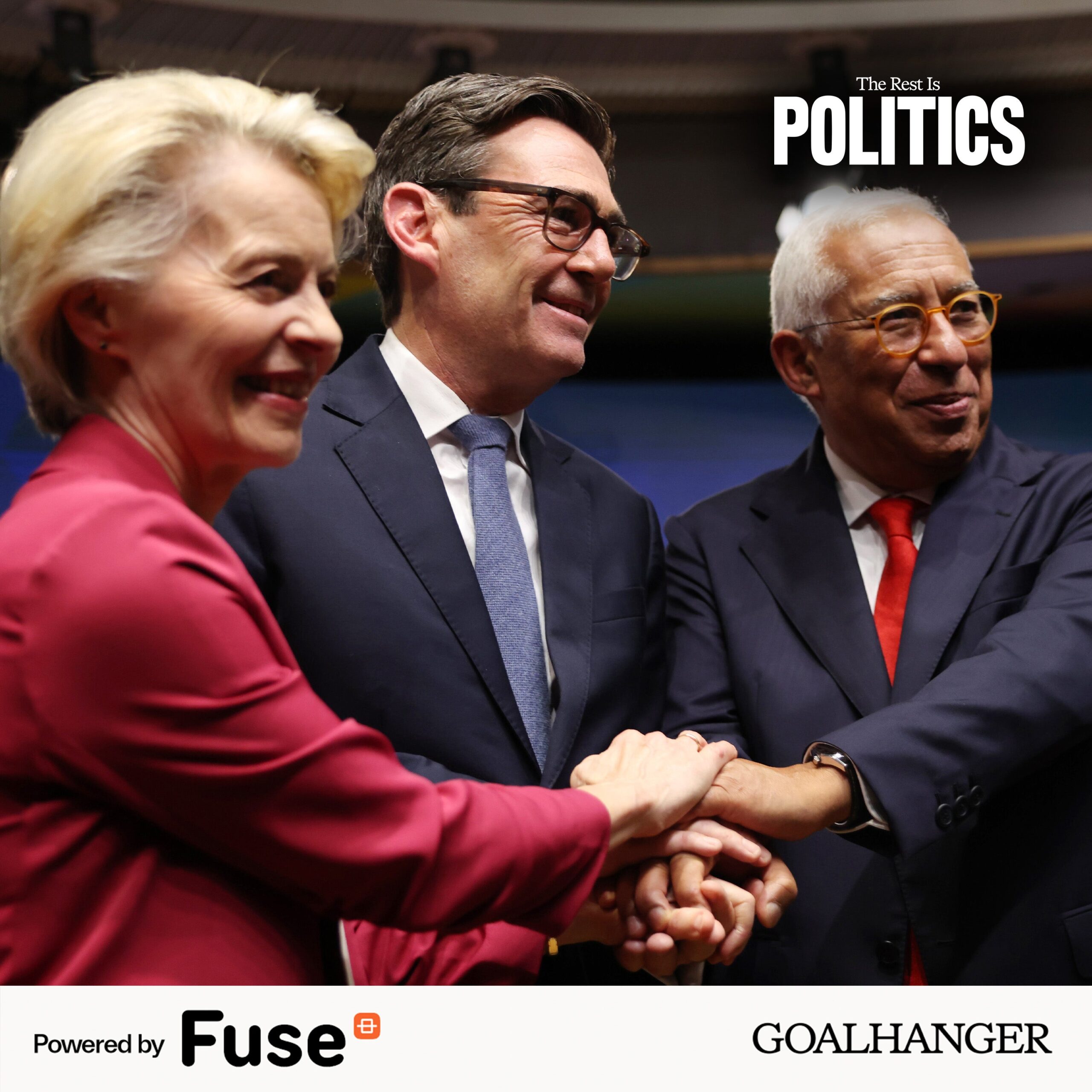
591. Burnham’s Brexit Rethink and the Return of the Rwanda Scheme
How can Andy Burnham sell a vision of closer ties with the EU to the British public when Europe remains such a contentious issue? Why are five EU countries planning to send asylum seekers to Rwanda, d... Continue25 November 2026
Posted by Alastair Campbell
Politicians and mental health … not a happy scene
Yesterday in Canberra, I made a speech in the Australian Parliament to MPs and staff about politics and mental health. The event was to launch a report, one of the biggest of its kind, into the menta... Continue23 November 2026
Posted by Alastair Campbell

216. Why Superpowers Can’t End Wars Alone and Why the World Ignored Myanmar
With 65 conflicts raging, 4,000 nuclear warheads on high alert and Donald Trump questioning the whereabouts of the UN Secretary-General, why has the UN lost its ability to broker peace? Why did the wo... Continue23 November 2026
Posted by Alastair Campbell

What the West Got Wrong About Afghanistan and Syria
What are the risks of foreign powers and policymakers trying to build nations and remake societies they don’t fully understand, like the US did in Afghanistan after 9/11? How do the Taliban and ISIS... Continue20 November 2026
Posted by Alastair Campbell

590. Are American Tech Billionaires Beyond All Control?
Despite a growing public backlash against AI and data centres, are the American tech bros still beyond control? What makes a political figure resonate with voters, and in the age of social media, do t... Continue19 November 2026
Posted by Alastair Campbell

Posted by Alastair Campbell

589. The Trump-Xi-Putin Summit and Can the UK Ever Trust America Again?
With Trump, Xi and Putin set to meet this week, what is it really like sitting across the negotiating table from world leaders, and what makes dealing with China so different? With the Jensen Huang an... Continue17 November 2026
Posted by Alastair Campbell



I was more disturbed that Gordon’s answer to “how will you halve the deficit in 4 years?” – was…… drum roll….. wait for it………… “The top rate of tax”.
Yeah – that’ll fill the hole………
How about adding your friends Blair, Mandelson and Robinson to name but three. We all know that you and Brown will be up there with them. I suppose it is only Tory millionaires you have an aversion to!
He says it’s “useless” coz he’s lost without an aggressive soundbite, same as Clegg
I did watch the whole debate and – I am a bit of a floating voter – I felt that Cameron has better delivery, but that Gordon Brown is more serious and has a better understanding of issues facing the country. Also, I have heard so many times on the news media today that it was all about the next election, but it actually seemed quite managerial.
The social care proposals are right and much needed. I got no sense from Cameron of what he would do if he was on the other side of the table
There is defintely a bit of inconsistency in Cameron’s approach. I have always voted Liberal but at least when Blair was leader of the opposition I knew what he wanted to do
Why did the BBC News have one quote from the PM and Cameron (bizarrely, repeated twice) then endless platituding from Nick Robinson. He may have seen the debate live. We didn’t and we are entitled to more of it on the news bulletins
This may be a bit obvious, but it is most amusing to hear Alastair Campbell, former right hand man of Tony Blair, depicting David Cameron as celebrity-obsessed and lacking substance.
Presumably Mr Blair will also be one of those multi-millionaires benefiting from the IHT cut?
The BBC is intent on self-destruction -covering up the moral and policy vacuum that is the Tory Party in order to be savvy to the assumed “zeitgest”. Good luck under the Tories -BBC!
For example -todays’ Queen’s Speech was once again strong on policy -and pretty specific policy at that -helping millions whilst offering reassurance to the markets with the Fiscal Responsibilty Bill. To lead on Cameron’s spurious accusations instead of actual policy initiatives is irresponsible to the public.
As for the “who got us into this mess” touted by the Tory sub-bloggers on news comment boards -er -have they not noticed that the financial crisis was GLOBAL? Who led the way towards global solutions -Cameron? Osborne? They were nowhere in the debate -or rather -in the wrong place with their neo-liberalism in one country “solutions”.
I enjoy reading your blog Alastair.
It’s true to say that David Cameron is a brilliant politician. His oratory in the house today was particularly effective.
And that’s why he scares me so much. The very few policies we can see from him will massively damage the country but he has a strategy to win 2 terms which is very simple and boils down to a simple sound bite or two:
“Labour has bankrupted the country… again”
“Britain is broken”
On the basis of this he doesn’t need policies for this or the next election – if he wins, in 4 years time, having done very little and even less good, he will go to the country with a polished version of: “We’re sorry we’ve done so badly but we couldn’t have done any better, look at the mess we inherited”
Why is the Labour party being so ineffective at challenging him on the facts. He stated today that violent crime is up by 70% which is simply a lie. According to the British Crime Survey (i.e. all crime, not just reported crime) it’s half the peak level of 1996 and close to an historic low. As a life-long Labour supporter, I am frustrated that my party seems ineffectual at fighting him. I am still not sure if the British public will see through him or whether the constant media bias we be enough to stop him being properly challenged but if the Labour party won’t fight then we are giving the election and the country to Dave and I genuinely fear for the damage he will do.
Dear Alastair,
I applaud your campaign to highlight mental illness and depression in society. As a child brought up by a depressed father I know first hand how mental illness devastates a family.
My father served in the Merchant Navy from 1939 to 1942 but was invalided out with “shell shock” when he was 21. Consequently he suffered from depression and insomnia all his life. As well as undergoing electric shock treatment he was prescribed barbiturates for 40 years to which he became addicted. When he died aged 61 in 1983 I found among his books one entitled Towards Diagnosis: A family Doctor’s Approach and I noted the well thumbed pages on the chapter entitled “Mental Disorders”. According to the book depression can be either endogenous or it can be psychoneurotic, ‘which follows from adverse circumstances’; my father’s psychoneurotic depression being the result of the horrors of the Atlantic and Pacific theatres of war.
In March 2003, exactly twenty years after my father’s death, B-52 bombers took off from Fairford in Gloucestershire to unleash “shock and awe” on Iraq, a policy defined by the Pentagon as “a simultaneous effect…to shatter Iraq, emotionally, physically and psychologically”. As the cruise missiles smashed into Iraq I remembered my father’s words: “Watch out when a generation who’ve never experienced war come to power”.
Given your obvious concern about depression, I wonder if you would be so kind as to read the following thoughts by mental health care professionals in Iraq today.
Dr Majid al-Yassiri, at the Centre for Psychosocial Services in Iraq, writes: “Depression is at a higher rate than one would expect in a population this size – three times as high”, while Kholoud Nasser Muhssin, a researcher on family and children’s affairs at the University of Baghdad writes:“60-70 percent of Iraqi children are suffering from psychological problems and their future is not bright”; and Dr. Nadal al-Shamri, a paediatrician in Baghdad says: “I look into the eyes of children whose parents have been killed. The psychological trauma is so deeply ingrained that they may never lead a normal life.”
Iraqi psychiatrists are seeing what they call a disturbing spike in mental health disorders, a problem compounded by Iraq’s lack of mental health workers, facilities and services. Mental health care professionals suggest the number of untreated or under-treated people nationwide reaches into the millions and some like Bilal Youssif Hamid, a Baghdad-based child psychiatrist, write of an “”an immense and unnoticed psychological toll, with long-term consequences”; while Hadoon Waleed, a psychology professor at Baghdad University believes that since the war, “eventually, the entire population of Iraq will require some type of psychological healing”.
Milan Kundera wrote: “The struggle of people against power is the struggle of memory against forgetting”, and although as a hollow self publicist you continue to enjoy a high profile and extraordinary career espousing high ideals about democracy and depression, there are many of us ordinary Britons who cannot forget the part you played in inflicting mental illness and psychoneurotic depression on a whole society.