

Europe needs to get real on defence; Britain needs to get real on Europe
13 February 2025


Post
30 March 2009

3 minute(s) read
Recent Posts

The Real Reasons Populism Is Taking Over
What is populism, and why is it so attractive to voters? Which human instincts do populists tap into to get votes? And what does a populist-led country look like? Alastair is joined by Liam Byrne, MP... Continue2 April 2026
Posted by Alastair Campbell
517. Is Trump Plotting Regime Change in Cuba? (Question Time)
Does Trump already have one eye on regime change in Cuba, as the US faces strategic failure in the Iran war? Who is more dangerous to the world right now, Putin or Netanyahu? Should Starmer be doing m... Continue2 April 2026
Posted by Alastair Campbell
516. Trump’s Iran Delusion and the Limits of American Power
Why has opposition to the Iran war been so muted within Trump’s America, and how is the US uniquely insulated from the worst impacts of the war? Do American tech billionaires now pose a serious thre... Continue1 April 2026
Posted by Alastair Campbell
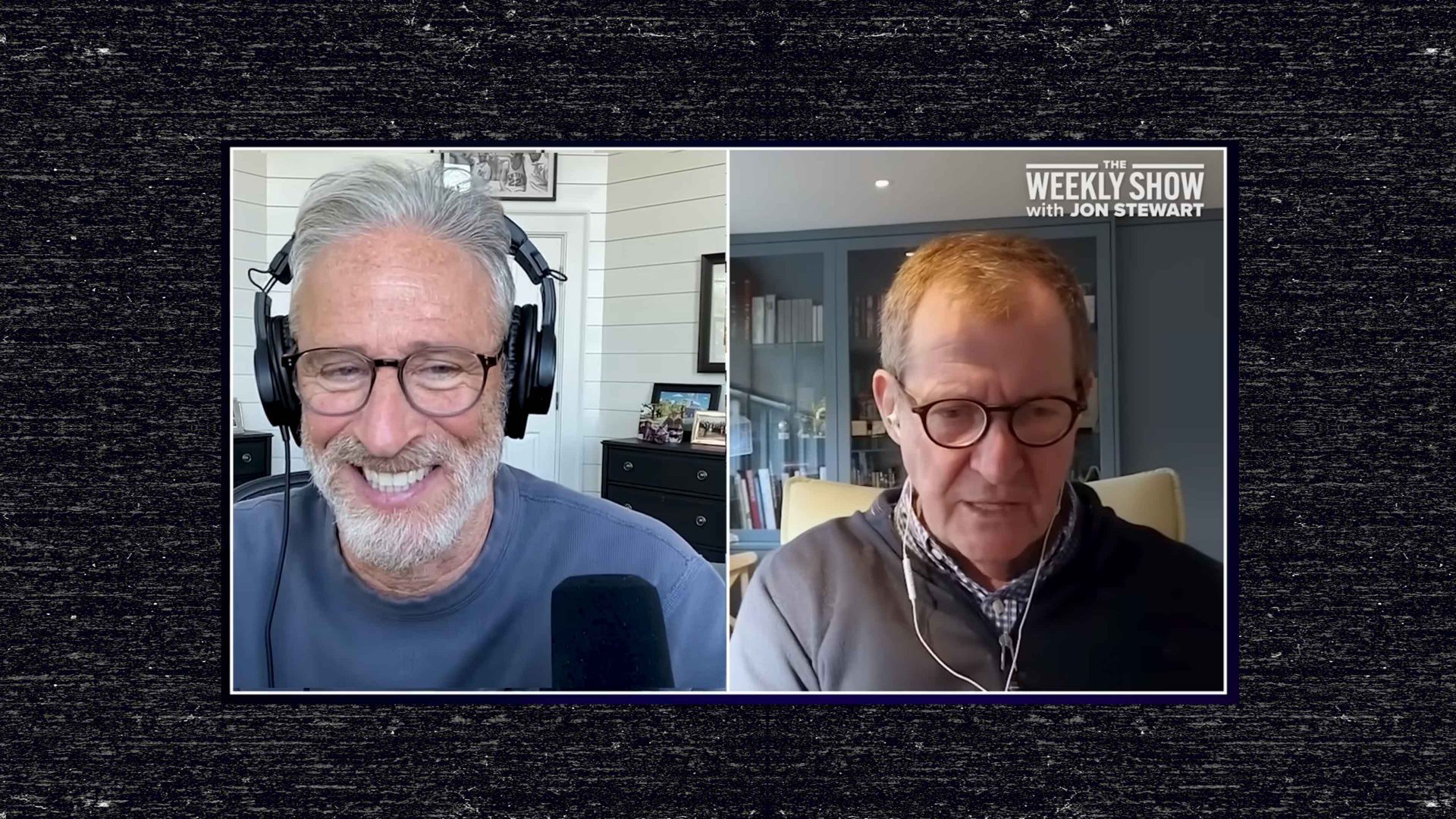
Alastair Campbell’s diary: How Jon Stewart told me the brutal truth about Trump and Hegseth
A tour of top podcasts featured savagings of Brexit – and the man baby in the White House... Continue
1 April 2026
Posted by Alastair Campbell
Nineteen Eighty-Four: Big Brother, Surveillance, and Fear (The Book Club)
Why is 1984 as relevant today as when it was published? Who is Big Brother, and why is he so powerful? What was George Orwell's intention when creating the world of 1984, and what does it tell us abou... Continue30 March 2026
Posted by Alastair Campbell

182. Culture Wars, Identity, and What Needs To Change In Congress (Sarah McBride)
How are rights for trans people in the US improving or worsening under the Republican administration? What fundamentally needs to change in Congress to improve the state of politics? Are the Democrats... Continue30 March 2026
Posted by Alastair Campbell
515. Starmer’s Foreign Aid Betrayal, Islamophobia & Australia’s Far Right (Question Time)
Are the UK government’s aid cuts more extreme than those made under austerity and Trump? What can Britain learn from South Australia's landslide against the far-right? Have the Tories & Reform a... Continue26 March 2026
Posted by Alastair Campbell
514. Who Is Profiting from Trump’s Iran Catastrophe?
Are Russia, Israel, and Iran itself the real winners from Trump and Netanyahu’s war? Is Starmer right to resist more British involvement in the war? Will the Gulf states realign with Europe and ‘m... Continue25 March 2026
Posted by Alastair Campbell

Sir,
I have just read an article written by your wife, about how she experiences your depression. It was like looking at a mirror image of my life and it made me realise how hard I make things for my family.
But what do you do when you are surrounded by beautifull children and a loving wife but you feel dead inside. To look into their faces and feel nothing breaks my heart, and is tearing at my relationship.
I keep thinking it will be ok when I find another housing project, or I find something meaningfull to do with my life.
But its not. Im still angry, bitter and empty, and I just dont know why.
I guess that its time for me to get help.
Thank you for your honesty. I can see the up hill struggle thats in front of me, now I have to get some spark to do something about it.
I hope that today is a good day for you, and the people around you.
Thank you.
David Smith.
I think it’s more the nature of Rudd. He is ineffably calm and often under-stated. Watch his speech on “Sorry Day” last year, for example. Instead of breast-beating it was a simple account of what was done to indigenous families and why it was right to say sorry. Its flatness (in some ways) contrasted with the drama of the subject matter. That tension, that coolness increased the speech power massively.
Before he died, Robin Cook used to cite an academic survey showing that the positive to negative ratio in the press had gone from 3 positive/1 negative in 1974 to 1 positive/18 negative a few years ago; and it was not only the Daily Mail that was covered. That is a cultural shift which has led to a cultural shift across the broadcast media too.
Another part of New Labour’s legacy, of which you personally can probably feel quite proud.
Kevin Rudd is a sharp cookie, and an outward-looking Aussie with a big Mandarin-speaking brain. I agree with the previous poster about how well he handled the Stolen Generations day, which happened when we were over there in 2008. It could have been a hideous tokenist gesture-fest, but he is grade A at keeping it real.
A great read on campaigning (in the 2007 Australian elections) is The Battle for Bennelong about how Maxine McKew managed to win John Howard’s seat ; she’s now in the Rudd cabinet, I think.
I have another theory as to why this negativity ratio has gone up over the last 2-3 decades and affected opinion. I think it has more to do with 24/7 news in a media loop continually bombarding the senses. Its almost subliminal, if you hear (paraphrasing) ‘Gordon Brown is Crap’ enough times you begin to believe it without even questioning it! The danger is it affects the neutrals /undecided more than of course the die hard party members of whatever persuasion
I wonder how our poisonous media can be turned around. It takes a special kind of politician to be as adept and confident as Kevin Rudd can be against a skilled interviewer. It’s a shame that “against” is the appropriate word de nos jours in this context – every political encounter seems now to be seen and judged by many as a “contest”.
It was good to see you on the Culture Show calmly standing up to Mark Kermode’s smart-alec assertions about all politicians, of course, being venal (and by implication all artists and luvvies saints!) but I’m afraid his simplistic views predominate amongst his chattering type.
It’s quite easy to see how we got here, much harder to see how to unpoison the well. Not much prospect of an end to punch and Judy politics in our lifetimes I fear. But some more quietly assertive rebuttal by politicians against the wilder negative simplistic assertions of interviewers would help…
Kevin Rudd’s focus and ability to bypass Marr’s early tactics of where he wanted Rudd to be – on the defensive; is exemplary of the fact that he has a burning passion to get his country’s response and indeed the response of the world, right on this economic crisis that is sweeping its way across the world. Other young members of Labour who are fighting for our political survival each and every week would have watched with the same level of envy that I did, hoping, wishing that for just once could our people appear on tv or radio, and walk in to that interview room with the same level of focus that prevents your intention from being distracted by the pesky and shallow sniping remarks of whoever is in the other chair. How are Labour to convince the country to provide us with a fourth term next year if we cannot present as polished, calm and in control as Kevin Rudd. Australians have much cause to be proud. We have cause to follow their leader’s example.
Doesn’t seem to explain why our politicos couldn’t take a similar approach. Sure it’s true to say that media outlets have moved away from selling journalism to selling life-affirming reassurances for people who choose a certain worldview. Yet, it was Rudd’s disarming of Marr that allowed him a clear platform to speak.
Maybe it would also help if the politician being interviewed pointed out the journo’s tricks, or cheekily asked if they’d care to rephrase the question in a less leading manner…
When I first watched Jeremy Paxman on Newsnight soon after I moved to Britain, I remember feeling like I’d just been involved in a major car accident. I’d never seen anything like it and I spent the next few years mesmerised by the information (or lack thereof) he got out of politicians.
I sent a recent John Humphrys interview with his boss Mark Thompson about the BBC’s refusal to air the Gaza appeal to all my North American friends as an example of what political interviewing should be at it’s best. (link to interview: http://news.bbc.co.uk/today/hi/today/newsid_7850000/7850617.stm)
Point is, we have nothing like Paxman or Humphrys here, politicians run circles around journalists, mostly because journalists want retain access. It’s the public who lose as politicians are never asked to defend their actions and decisions in an intellectually and rhetorically challenging way.
Reading the transcript of the Marr interview, it seems Rudd got the job done. What’s difficult to understand is why politicians find it so difficult to express themselves in a similarly straightforward and competent manner. Paxman notwithstanding, the onus is on them to get their message across; the more of an intellectual challenge is brought to that message, the better.
To pick up on Robin Cook’s poll, I think the change in negativity from 1974 to a few years ago reflects the fragmentation and competition among media outlets. Unfortunately, the race for audiences is fuelled not by maturity, calmness or the purpose to illuminate, teach, inspire… it’s all driven by the goal to sell. Just like at a cheap market, where the seller that attracts more people to his/her stand is the one who is the loudest, flashiest, with an in-your-face approach, so do journalists behave. Applied to political coverage and interviews, this shows in the form of “Would you say that…” questions that frame the answer for the interviewee, or the assessment of problems with absolute terms like “total failure,” “utter waste,” “completely disappointing” etc I might add that in the U.S. there is also the specimen of the angry, shouting, eye-balls-popping-out-of-the-head type of obnoxious journalist. They must think “I’m shouting my lungs out here, my vocabulary is a blood-fest, therefore I have the most profound judgment to share with you all. Look at me!!”
But as AC notes, it takes two to tango, and politicians often play along so as not to appear weak. So far Obama has been able to sedate these folks a bit by answering calmly, wisely, with measured words and proper tone of voice. Before addressing absolutist questions from journos, he’ll often remark the inadequate use of labels, and the unwarranted glum. But for every Obama-type there are probably three or more politicians who are willing to join the shouting match and the competition for gloom. This strident discourse punctuated by action-oriented language is what appeals to many constituents (especially here in the US) and gives the impression that their representative is doing something…
I don’t see this as a problem emanating from a media drowned world, but rather a post-Watergate, post-“age of innocence” world. The public (and as a consequence the media) have been burned and they’re not going to be caught off guard again. Cynicism and negativity and apprehension are defences. Pre-Watergate, this brand of media would have been unacceptable no matter the number of outlets. You could also argue this in post-modern aesthetic terms but it would boil down to the same thing; the audience requires layers of distance between itself and the subject.
Obama has a leg up because the press is mesmerised by him, AND, as the Washington press puts it “c’est pas réciproque”. Obama is an odd one in many ways including in this trait that characterises most politicians: he’s not needy. Unlike Bush, he has nothing to prove to dad; unlike Clinton, he doesn’t need to be constantly reassured that he is loved. Even AC remarks on a similar need on TB’s part that would flare up from time to time.
Obama is Obama like JFK was JFK. To use them as frames of reference is misleading because they are unlike the overwhelming majority of politicians.
Saw the Kevin Rudd interview – very confident and challenging to the current media view re rubbishing the G20 meeting – although he continued to explain the positives and emphasised the positives, in particular criticising the UK media view of the overall process, thought it funny that the BBC news round-up still decided to interpret his comments as agreeing with the general UK media rubbishing and “Rudd downplays G20” view
Em, I agree on Obama. However, that does not mean that rank-and-file politicians shouldn’t aspire to communicate the way he does.
A
Good to see a bit of Rudd appreciation from our UK cousins!
Rudd tends to cop it a lot of stick from the press gallery back home for being insufferably boring when he speaks in public or in the media (which, in fairness, he sometimes can be). Given his approval ratings at the moment, I don’t think it’s a criticism that he should be very bothered by.
“Before he died, Robin Cook used to cite an academic survey…”
I’m glad you clarified that, otherwise we might have thought you had the Ouija board out.
I would not agree that there is a maturity abroad that is unavailable in UK media.
Speaking as one who has crossed the professional divide similarly to AC (albeit at a less lofty level), there is much more in common between the Australian and UK media.
It is not a coincidence, surely, that this binary scenario – the defauilt adversarial positioning as ‘media vs subject’ exactly mirrors the Westminster system upon which it mainly focuses? That is, one side FOR something, and the other side OPPOSES. Or the judicial system, with its PLAINTIFF and RESPONDANT?
The media, I’m afraid to say, is us. Notably, the more it seeks to be like its readers and viewers, the less it is read and watched by them.
I dare say we like to like ourselves, but don’t find ourselves particularly interesting. It seems that we’re just not that into us…