
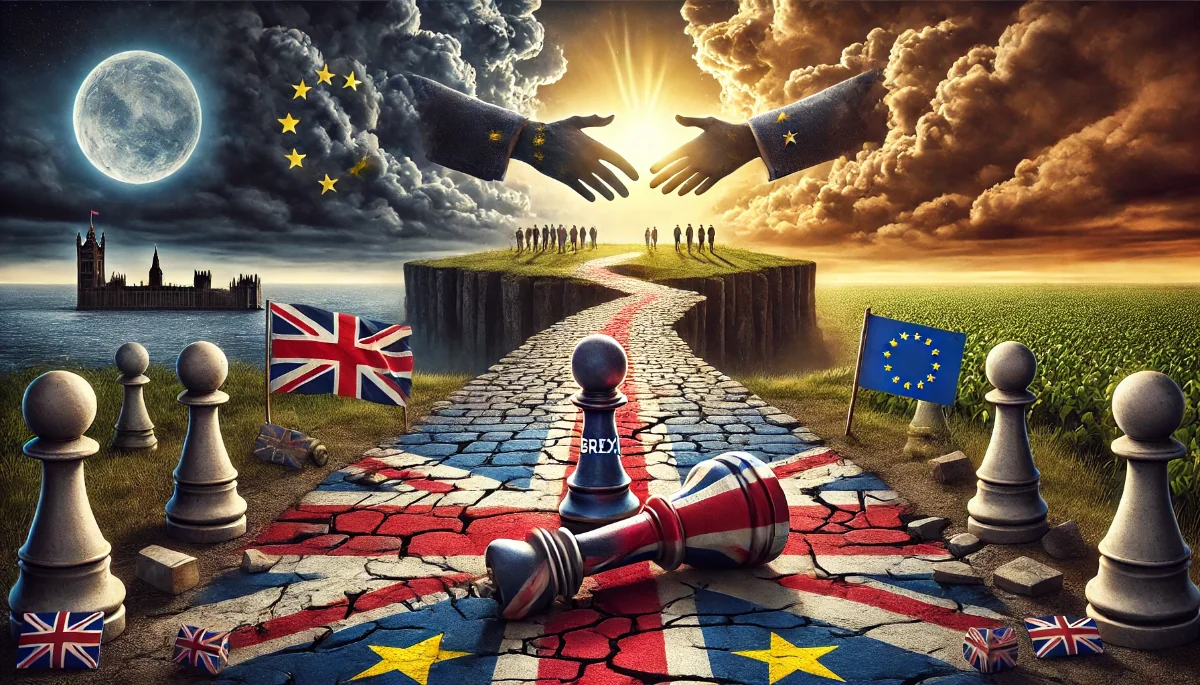
Europe needs to get real on defence; Britain needs to get real on Europe
13 February 2025


Post
15 May 2011

3 minute(s) read
Recent Posts

184. President of Ukraine: Volodymyr Zelenskyy
At a time when the United States is threatening to withdraw from NATO, how can Europe maximise its power to deter Russia's threat? If Vladimir Putin were given the territory Donald Trump offered in hi... Continue9 April 2026
Posted by Alastair Campbell
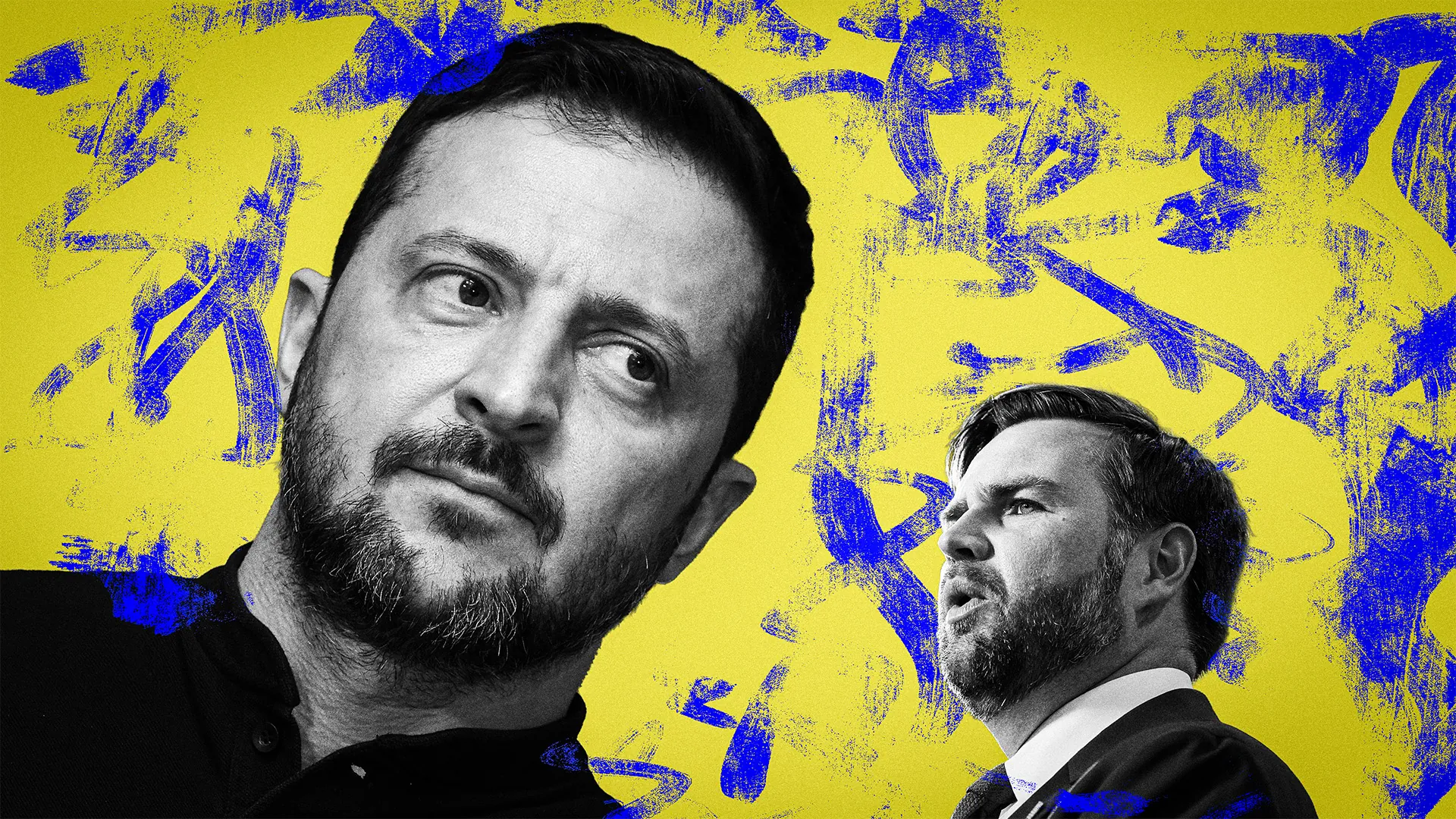
Alastair Campbell’s diary: Here’s what Zelensky really thinks of JD Vance
After the madness of MAGA in Iran, meeting Ukraine’s president is a lesson in empathy and emotion... Continue
9 April 2026
Posted by Alastair Campbell

519. Trump’s NATO Threat & a Critical Election in Hungary (Question Time)
Following Trump's threats to remove the US from NATO, is the alliance effectively finished? After nearly two decades in power, could Viktor Orbán finally be unseated in Hungary's upcoming election? H... Continue8 April 2026
Posted by Alastair Campbell
518. Is Trump a Fascist and is His War on Iran Unwinnable?
Has Trump crossed the line from right-wing populist to fascist? Is he fighting a war with Iran he cannot win? Is Iraq being dragged in against its will? Join Dominic Sandbrook and Alastair Campbell a... Continue7 April 2026
Posted by Alastair Campbell
183. From Bradford to Westminster: Faith, Identity, and Power (Naz Shah)
How did Naz Shah’s experience growing up in Bradford and her experience with her family in the legal system influence her to go into politics? What does it mean for a political party to truly “sta... Continue6 April 2026
Posted by Alastair Campbell
The Real Reasons Populism Is Taking Over
What is populism, and why is it so attractive to voters? Which human instincts do populists tap into to get votes? And what does a populist-led country look like? Alastair is joined by Liam Byrne, MP... Continue2 April 2026
Posted by Alastair Campbell
517. Is Trump Plotting Regime Change in Cuba? (Question Time)
Does Trump already have one eye on regime change in Cuba, as the US faces strategic failure in the Iran war? Who is more dangerous to the world right now, Putin or Netanyahu? Should Starmer be doing m... Continue2 April 2026
Posted by Alastair Campbell
516. Trump’s Iran Delusion and the Limits of American Power
Why has opposition to the Iran war been so muted within Trump’s America, and how is the US uniquely insulated from the worst impacts of the war? Do American tech billionaires now pose a serious thre... Continue1 April 2026
Posted by Alastair Campbell

Fame is a necessary capital for politicians. Celebrity status guarantees media attention.
It is said that all publicity is good publicity nowadays. Frank Sinatra famously said that he does not mind what the papers write about him as long as his name is spelled right!
Public attention to President Clinton in the US was huge. But in France, up to now politicians have been able to keep their private lives private.
Affairs of Chirac and Mitterrand were hardly mentioned in the media even though Mitterrand supported a second family partly at government´s expense!
Sexual relationships, drinking habits, family troubles etc. have not made the headlines in France. In Britain, these things have, of course, been a fair game.
Anglo-Saxon view on press freedom means that public interest ranks higher than the individual´s right to privacy.
Tony Blair said in 2004 that ministers should not be judged on their private lives unless their behaviour affected the performance of their public duties.
But even in France there is now erosion of the boundaries between private and public. There is more competition in the media. Internet has arrived. And there has been a personalization of politics.
Humanization has been used as an image strategy. Politicians appear to be more human, more personable. Privatization has been used to simplify complex political issues.
Privatization has been used as emotionalism to generate general sympathy and create emotional bond. Niceness and feel-good factors matter. Sometimes more than actual policies.
Sex life of DSK will not stop women voting for him in any presidental campaign. This side of DSK´s life has become a folklore in France. But he is just French!
French voters do still judge politicians according to their projects. What they think of them as men is another matter. In 2007 nobody cared about Sarkozy´s marriage.
In Britain parliament is currently debating proposals to reform libel laws. At the moment superinjunctions are gagging journalists to report matters of high public interest.
Existence of superinjunctions cannot be reported. But some alleged details of privacy orders surfaced this week on Twitter.
Some argue for a privacy law, others want to regulate Twitter. And then there is the question of a statutory regulator for the press.
If the press wants to retain self-regulation, it has to first make sure that the PCC is a credible regulator.
Journalistic freedom is needed to uncover the truth. But is all that interests public in public interest?
On the other hand many high-profile figures trade on an artificially constructed image of their private lives for profit.
In the age of internet nothing is private anymore.
Nice post. I had forgotten that Strauss-Kahn was tipped to be the PS candidate . . . this business in New York really blows the whole thing open. (More worryingly: might it give the Front National a leg-up to power?)
Another point: if Strauss-Kahn quits his job at the IMF prematurely (which is likely), will the debate about Gordon Brown’s suitability for the post be reopened?
Good post. I’d forgotten that Strauss-Kahn was widely tipped to be the PS candidate . . . this business in New York really does blow the whole thing open. Worryingly, might the Front National have a leg-up to power?
I wonder too whether Strauss-Kahn will leave his IMF job prematurely. It seems likely, no? And if he does, will the debate about Gordon Brown’s suitability for the post be reopened (and, indeed, Cameron’s opposition to the idea?)
I’ve just heard a reporter on Wato/R4 saying that whatever the outcome, S-K is now finished.
What a bizarre thing for a him to say. Would S-K really be finished even if he is completely exonerated?
Do we not wait for facts before opining in such theatrical ways?
I’m feeling very confused by the overly-PC atmosphere at the moment.
In our own ‘injunctions situation’ we have prostitutes who’re thwarted in their attempts to kiss’n’tell (hardly the right phrase when it’s apparently unusual for commercial sex to involve kissing) being portrayed as poor women/’sisters’ who have less rights than their rich male clients.
Durrrrr
“In the age of the internet nothing is private anymore”
I often wonder how much longer we shall be allowed to keep and use this particular facility.
“In the age of the internet nothing is private anymore”
I often wonder how much longer we shall be allowed to keep and use this particular facility.
If one loves conspiracy theories then the chamber maid ruse would be the perfect sting by your political opponents, especially if you’ve had to reveal previous indiscretions, as was the case for DSK…great film script!