

Europe needs to get real on defence; Britain needs to get real on Europe
13 February 2025


Post
12 December 2009

3 minute(s) read
Recent Posts

183. From Bradford to Westminster: Faith, Identity, and Power (Naz Shah)
How did Naz Shah’s experience growing up in Bradford and her experience with her family in the legal system influence her to go into politics? What does it mean for a political party to truly “sta... Continue6 April 2026
Posted by Alastair Campbell

The Real Reasons Populism Is Taking Over
What is populism, and why is it so attractive to voters? Which human instincts do populists tap into to get votes? And what does a populist-led country look like? Alastair is joined by Liam Byrne, MP... Continue2 April 2026
Posted by Alastair Campbell
517. Is Trump Plotting Regime Change in Cuba? (Question Time)
Does Trump already have one eye on regime change in Cuba, as the US faces strategic failure in the Iran war? Who is more dangerous to the world right now, Putin or Netanyahu? Should Starmer be doing m... Continue2 April 2026
Posted by Alastair Campbell
516. Trump’s Iran Delusion and the Limits of American Power
Why has opposition to the Iran war been so muted within Trump’s America, and how is the US uniquely insulated from the worst impacts of the war? Do American tech billionaires now pose a serious thre... Continue1 April 2026
Posted by Alastair Campbell
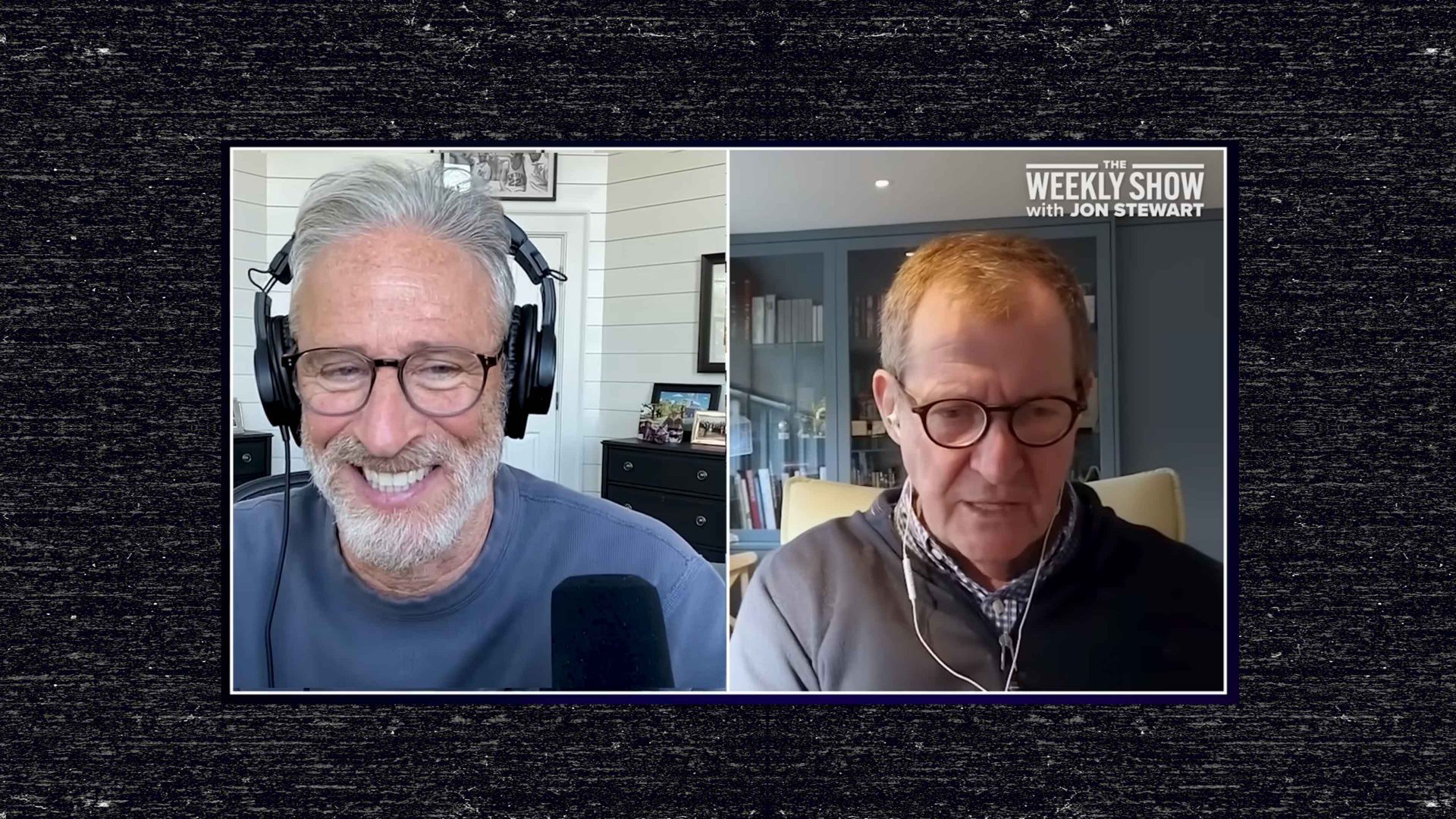
Alastair Campbell’s diary: How Jon Stewart told me the brutal truth about Trump and Hegseth
A tour of top podcasts featured savagings of Brexit – and the man baby in the White House... Continue
1 April 2026
Posted by Alastair Campbell
Nineteen Eighty-Four: Big Brother, Surveillance, and Fear (The Book Club)
Why is 1984 as relevant today as when it was published? Who is Big Brother, and why is he so powerful? What was George Orwell's intention when creating the world of 1984, and what does it tell us abou... Continue30 March 2026
Posted by Alastair Campbell
182. Culture Wars, Identity, and What Needs To Change In Congress (Sarah McBride)
How are rights for trans people in the US improving or worsening under the Republican administration? What fundamentally needs to change in Congress to improve the state of politics? Are the Democrats... Continue30 March 2026
Posted by Alastair Campbell
515. Starmer’s Foreign Aid Betrayal, Islamophobia & Australia’s Far Right (Question Time)
Are the UK government’s aid cuts more extreme than those made under austerity and Trump? What can Britain learn from South Australia's landslide against the far-right? Have the Tories & Reform a... Continue26 March 2026
Posted by Alastair Campbell

when mental illness is seen in the same way as physical illness then perhaps the proper resources and investment will be made by governments…until then mental illness will be the Cinderella of medicine.. i applaud your efforts Alastair for putting your undoubted communication skills to work in this area…As to art and creativity, over 40 years ago, as a volunteer, i was giving photography lessons to Broadmoor inmates, it was astonishing what some of these people produced…
(You see we get on so much better when you leave your political baggage at home…!)
There is definitely a close link between creativity and people who maybe live a little near the edge for their own good (or, I am aware, their own choices.) I agree that there should be lots of this kind of thing in our public spaces
Stuart Semple’s work is superb and the prices on there now very reasonable. All part of the Nancyboy series
This is the kind of thing that will fall to the back of the queue as public spending gets tighter and tighter but it is the kind of thing that delivers big results for small investment
While I greatly admire the works of Mervyn Peake, to take the example which springs to my mind, I fear that some work by the disturbed is not of much value to anyone looking at or reading it.
Depression is not an automatic entree to creativity, but all sorts of work, including the arts, can help those who are afflicted.
Some of the most remarkable work I have seen was by a disabled painter who died at the age of 4. He loved to paint.
I helped make a film some years ago about my own experience of mental health in the first Mad for Arts series made by the Community Channel. Unfortunately, I’ve lost my copy of the film and they seem to have done so also – but it was a creative experience which taught me a lot about myself and what I had been through. I think it allowed me to realise that the trigger for my illness – the Iraq War – was part of a wider set of circumstances and conditions.
My obsession with what others had supposedly done to me had clouded my ability to perceive a more complex reality.
Perhaps it is fair to say that mental ill health does not automatically confer wisdom or make someone interesting – but all of us, whether mentally ill or well, are surely interesting people in some way or another. The challenge is to identify what each of us can usefully share. With the help of sympathetic communication professionals, all of us can have some story worth telling.
I too admire your work Alastair in the field of mental ill health. Bearing witness to experiences some feel ashamed of and others believe should be kept beyond their ken is most honourable. I recognised myself in “Cracking Up” and wished I had been eloquent enough to tell my story as effectively as you have been able to tell yours.
Keep up the good work.
Hate to bring us back to politics…I am very grateful that I had my breakdown under a Labour government and a properly resourced NHS which is willing to continue my prescription for a medication that works very effectively.
Under the Tories I’d have been wandering the streets untreated for days and quite probably be dead by now.
Instead I’ve been paying my taxes and helping look after aged parents keeping them from being a burden on the state.
Politics and folks’ mental health are not unrelated.
All the best!