

Europe needs to get real on defence; Britain needs to get real on Europe
13 February 2025


Post
17 November 2009

3 minute(s) read
Recent Posts

518. Is Trump a Fascist and is His War on Iran Unwinnable?
Has Trump crossed the line from right-wing populist to fascist? Is he fighting a war with Iran he cannot win? Is Iraq being dragged in against its will? Join Dominic Sandbrook and Alastair Campbell a... Continue7 April 2026
Posted by Alastair Campbell

183. From Bradford to Westminster: Faith, Identity, and Power (Naz Shah)
How did Naz Shah’s experience growing up in Bradford and her experience with her family in the legal system influence her to go into politics? What does it mean for a political party to truly “sta... Continue6 April 2026
Posted by Alastair Campbell
The Real Reasons Populism Is Taking Over
What is populism, and why is it so attractive to voters? Which human instincts do populists tap into to get votes? And what does a populist-led country look like? Alastair is joined by Liam Byrne, MP... Continue2 April 2026
Posted by Alastair Campbell
517. Is Trump Plotting Regime Change in Cuba? (Question Time)
Does Trump already have one eye on regime change in Cuba, as the US faces strategic failure in the Iran war? Who is more dangerous to the world right now, Putin or Netanyahu? Should Starmer be doing m... Continue2 April 2026
Posted by Alastair Campbell
516. Trump’s Iran Delusion and the Limits of American Power
Why has opposition to the Iran war been so muted within Trump’s America, and how is the US uniquely insulated from the worst impacts of the war? Do American tech billionaires now pose a serious thre... Continue1 April 2026
Posted by Alastair Campbell
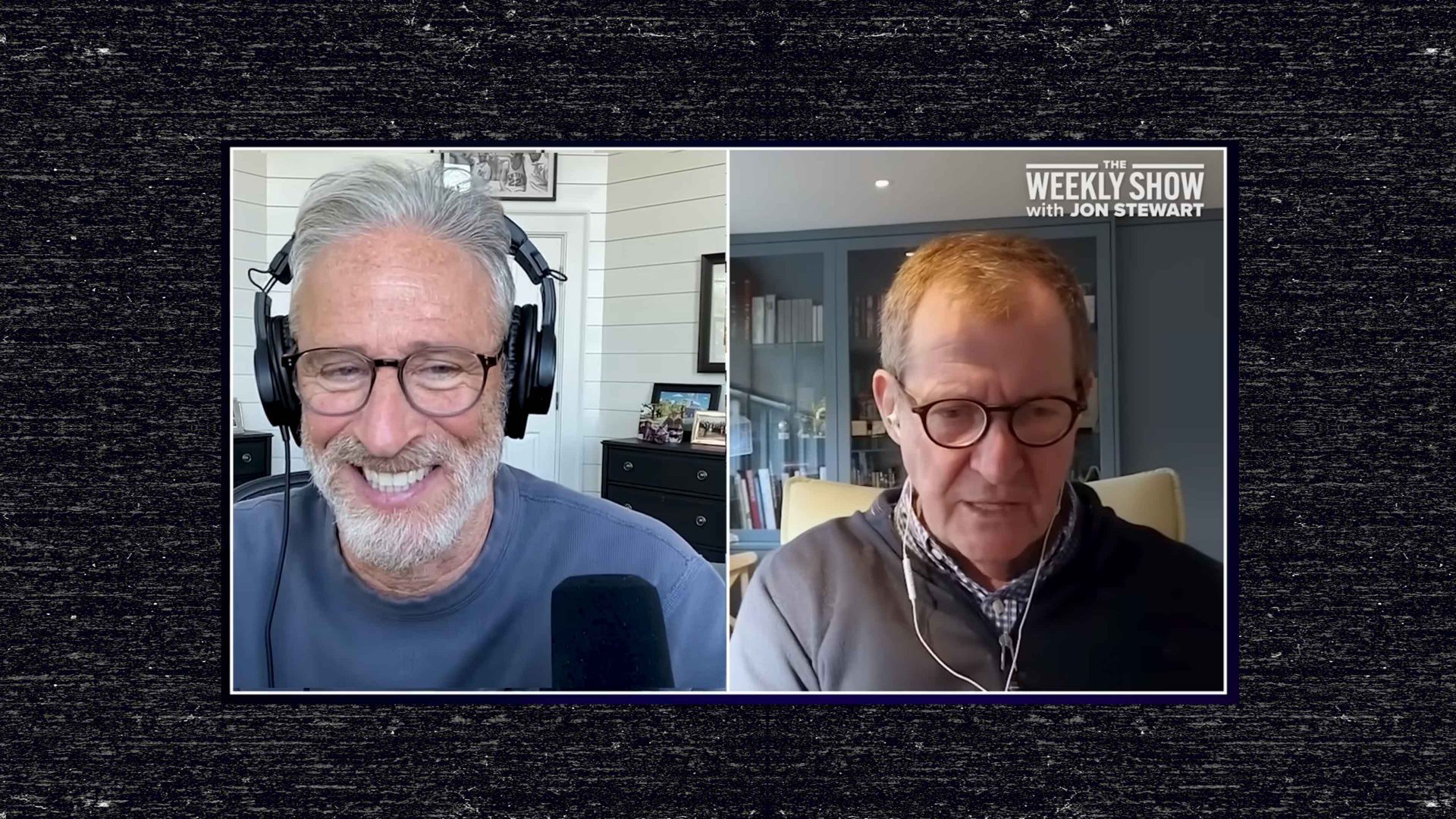
Alastair Campbell’s diary: How Jon Stewart told me the brutal truth about Trump and Hegseth
A tour of top podcasts featured savagings of Brexit – and the man baby in the White House... Continue
1 April 2026
Posted by Alastair Campbell
Nineteen Eighty-Four: Big Brother, Surveillance, and Fear (The Book Club)
Why is 1984 as relevant today as when it was published? Who is Big Brother, and why is he so powerful? What was George Orwell's intention when creating the world of 1984, and what does it tell us abou... Continue30 March 2026
Posted by Alastair Campbell
182. Culture Wars, Identity, and What Needs To Change In Congress (Sarah McBride)
How are rights for trans people in the US improving or worsening under the Republican administration? What fundamentally needs to change in Congress to improve the state of politics? Are the Democrats... Continue30 March 2026
Posted by Alastair Campbell


well done
Thank you for continuing to bring these issues up on your blog – it’s so important for people in your position to do so. I work in politics at Westminster, and have often feared the effects of my own depression and anxiety and the impact were they to ‘come out’. Your candour over your own experiences have given me hope that it is possible to work at the very highest levels despite battling these illnesses, and I hope other senior politicians and professionals will feel able to be more honest in future too.
Aussie politics is tougher than most, so he may well be taking a risk, but if it is as you set out, maybe Griffiths will get the opporobrium he deserves and Foley the support. Either way, I just had a look at the FT Germany piece and it is as you say awful.
I saw your documentary on BBC2 and I found it genuinely helpful, as the son of someone whose father has had a number of breakdowns. eventually I persuaded him to watch it too and I think he found it helpful too. we should not be prescriptive but I do think openness helps, and I for one am appreciative of yours, Stephen Fry’s and others.
FB Copy:
The original article was in the FT London, October 4th, on the back of Andrew Marr’s questioning whether GB ‘took pills.’ Seems to have passed beneath the radar then.
LK does specialise in ‘glib’, though ‘pointless’ might be the better phrase here. There is plenty of meat on any bone about the depressive impact on mental health of some working environments, and she does at least have one good point – quoting doctors who say it is often not the people at the top of organisations who suffer the most, but often the more junior ranks. (Chauffeurs not CEOs more at risk, it seems.)
I know that my own episodes of chronic depression give me insight into the world of work to which I belong (adult social care funnily enough). But I also know that revealing it is a complete ‘no no’. I wish I could ‘bring it to the table’ sometimes, not keep it under wraps; but I’m not daft enough to presume it will be well received. Less a stigma thing, more a totally pragmatic (from the organisation’s perspective) thing. Too target driven to care, that’s the way of that world now. (And I wonder how that has come about, eh!)
So a mild curse on LK for her insensitive frivolity, but a much more astonished rebuke to FT Deutschland for re-printing her article just now. I hope Robert Enke’s widow does not take the FT, but if she does then I equally hope she gives its editor and LK a good slap.
Very nicely written Mr Campbell.
You are just a load of fruit and nut cases.
I totally agree, perceptions can be changed when there’s more information out in the open. The more of us who are open about suffering from depression, the better general understanding we’ll be able to build. It’s sad when people undermine it, but there’s people doing that on almost every topic you can think of.
Alistair
From what I can see & read on here you are helping a lot of people with mental illness & making it less of a taboo subject.
The more people like yourself ie in the public eye that are brave enough to share their experiences it will lessen the stigma for sufferers & could help with recovery.
An excellent piece, cogently argued. Nothing but praise for your blog today Alastair. I hope more people will complain to the FT Deutschland. How crass can the editorial group be to allow this to be published after the tragedy of Robert Enke – unbelievable!
As well as Kevin Foley we have had a few high profile people in Australia talking very publicly about their depression. The Premier of Western Australia resigned a few years ago because of depression.
Jeff Kennett, former Premier of Victoria is the Chairman of Beyond Blue, which addresses issues relating to depression. For all his faults, Kennett has done a great job about bringing mental health issues out into the open in Australia.
I must say that I didn’t find the ‘opening up’ process particularly beneficial. Most people seem happy to ‘understand’ and support you but they have trouble really understanding the problem. I think it’s important to realise that most people see the world as being populated by other people whose minds work in the same way as theirs. Maybe they are more of one thing and less of another, but essentially they believe everyone thinks like them. It is only natural for them to assume therefore, that someone who suffers from depression is just like them, but not as good at dealing with being fed up etc. This, is my experience, leads them to assume that the person is somehow inferior.
That this problem would be to some extent negated by better understanding is undoubtable. But I think this is far from the end of the problem because, in asking people to really understand, you are asking them to change the way in which they rationalise the world.
Hi- to anyone still reading this- and Alistair:
I’ve just heard an excellent discussion on “Off the Page”,Radio 4- with today’s guest psychologist, Oliver James.(8/12/09.)
One of the topics- the effect of mass consumerism/marketing and increased materialism on an individual’s identity, sense of self, and mental health.Also, a breakdown of society and community has occurred,leading to isolation and depression- and rates have gone up massively since 1979- surprise surprise!
Oliver James talks a lot of sense about modern times- so I’m off to the bookshop for Xmas!